…ill well off its all-time highs. Although we're in this, you know, where I think we can say we're coming out of the bear market. Do you see that as a buying opportunity? Or or more of a warning, you know? >> Yeah, I mean I would say I mean in my opinion Bitcoin's always a buying opportunity cuz I'm I'm I'm thinking long-term at UTXO. We're thinking long-term. We're thinking, you know, 5, 10, 20 plus years out. And so you know, our thesis is that, you know, Bitcoin is going to be much higher, you know, in 10 years than it is t…
in my opinion Bitcoin's always a buying opportunity
AI-extracted context
Yeah, I was about to ask you about the the temperature right now cuz Bitcoin's still well off its all-time highs. Although we're in this, you know, where I think we can say we're coming out of the bear market. Do you see that as a buying opportunity? Or or more of a warning, you know? >> Yeah, I mean I would say I mean in my opinion Bitcoin's always a buying opportunity cuz I'm I'm I'm thinking long-term at UTXO. We're thinking long-term. We're thinking, you know, 5, 10, 20 plus years out. And so you know, our thesis is that, you know, Bitcoin is going to be much higher, you know, in 10 years than it is today. And so I try not to get into the day-to-day, you know, price action over the next few months or where we think it's going to go or not go. No one really knows.
Full Transcript
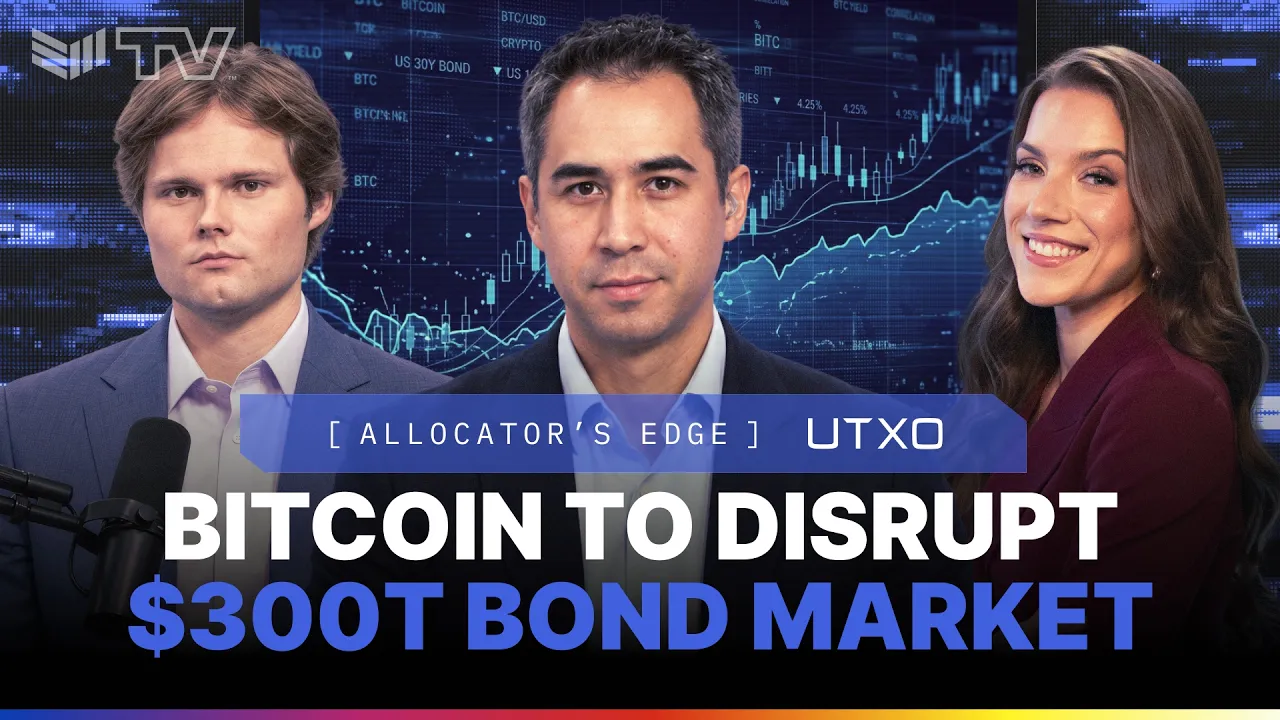
Bitcoin Treasury company perpetual preferred equities have been rallying alongside Bitcoin strategy stretch sitting just above 9950 per share. And now to talk about what's next for the digital credit space that's our very own Lauren Azmus, head of investor relations at UTXO Management. I know you just flew back from New York just to see us, right? >> Absolutely. Yes, yes. A busy week in New York, a lot to talk about with Bitcoin and Bitcoin Treasuries, but thank you for having me. I can say confidently now that B M T V is my go-to morning news source that has taken over other news outlets I used to listen to in the past. So, great job and congrats on all the success. >> We love to hear that. Thank you, Lauren. And it's great seeing you here on set instead of just, you know, around the office. But let's talk about the Bitcoin Treasuries conference cuz you just spent some time there. What was the overall mood and some of your biggest takeaways from that event? >> Very constructive, very bullish. I mean, I guess everyone's maybe a little biased cuz everyone already understands Bitcoin and sees kind of where this is going from a institutional adoption standpoint. But I think that was really the key. Obviously, it's been a very rough year with price action of Bitcoin, price action of Bitcoin Treasury companies. Um, but it does seem like we are out of the worst of it from a bear market perspective. And really what you saw in the room was just a lot of building and and really good conversations of, you know, where is the next phase for the institutional adoption of Bitcoin. And that could be Bitcoin Treasury companies, it could be operating companies that have Bitcoin on their balance sheet, new products, new strategies that fit institutional mandates and the vehicles that they require. So, it was really all the above. Packed room. And then on top of the the conference itself, we had a jam-packed a few days of meetings. Me and my my colleague Dan Hillary who I know was on the show a few weeks ago all across Wall Street, all across New York. And so, Bitcoin has has arrived on the institutional stage and I think we're just getting started. >> And Lauren, when you're talking to these institutional investors, compared to even just a year ago, maybe a couple of years out, how big of a difference is that dialogue? Have they re-framed the way that they're thinking about Bitcoin and these operating businesses, treasury companies and digital credit? >> I think there is a little bit of a re-framing. I think it goes back to Bitcoin being accepted as a capital asset. And so, you know, we all know that Bitcoin is money. Bitcoin is freedom tech. And I think it's it's kind of new of treating Bitcoin as a capital asset. And really it was from the onset of the ETFs, the Bitcoin ETFs approved in early 2024 that that kickstarted that. So, I think we're we're still kind of through that maturation phase of a Bitcoin being accepted as a capital asset. And as you know, a lot of institutions, they love to see track records. 3-year, 5-year track records. You know, we're only what, 2 years, not even 2 years from the launch of the Bitcoin ETFs. So, we haven't really even hit a 3-year track record from the Bitcoin ETFs yet. Um so, I think like I said, we're just getting you started with Bitcoin being accepted and then these other vehicles, companies adopting Bitcoin is only going to grow. >> I'm curious cuz you came to UTXO from the consulting side. What was the biggest pushback against Bitcoin you heard when you were look at from that side of things? >> It really it really evolved quite a bit. So, I mean, we started looking at Bitcoin back in the 2016, 2017 cycle at my former firm. I worked for an investment consultant that serviced endowments, foundations and family offices. And um you know, I couldn't even bring it up to our IC uh at the at the time, right? It was just I would have gotten laughed at and said, "Hey, focus on bonds and fixed income. What are you supposed to do? You know, why are we talking about this Bitcoin thing?" Uh to fast forward, um that firm actually adopted uh one of the Bitcoin ETFs onto their approved list, uh manager approved list. >> Yeah. >> Uh and so, that was that was almost 2 years ago, a year and a half ago. Um so, I think that the the the talk has changed. I think what's really important is continuing to educate on how Bitcoin fits as a capital asset in a diversified portfolio. And so, UTXO, we're finishing up our research report that really talks about that. You know, if you have a 1, 2, 3, 5% allocation to Bitcoin, how does it affect your risk-adjusted returns across your portfolio? And And the punchline is a 2.5% allocation over the last 10 years. So, not even counting the, you know, the the early adoption of Bitcoin, but just the last 10 years of Bitcoin has produced over 200 basis points of excess return uh with the same level of volatility and only 80 basis points, you know, 0.8% uh more drawdown across your whole portfolio. And so, at the end of the day, Bitcoin as a capital asset gives you low correlation to stocks, to bonds, and positive skew. And so, I think another interesting thing people think about is the volatility, but 2/3 of the volatility of Bitcoin has been upside volatility, meaning the price has gone higher and then that volatility has been to the upside, not to the downside. And so, when you're looking for an asset to diversify the rest of your portfolio, in my opinion, Bitcoin is is the perfect one because it doesn't behave like stocks, it doesn't behave like bonds, and it gives you that positive skew to increase your your your returns. >> And you know, you spent more than a decade helping institutional investors underwrite uh you know, managers, build portfolios. You know, so so you have a really good line of sight into how these institutions are thinking about their allocation. You bring up the point of of the Sharpe ratio, uh the non-correlated nature of Bitcoin. You know, what other variables are are kind of of key importance in the way they're thinking about it? And And how is that frame uh maybe shifted? Or Or how has maybe uh education and and kind of the maturation of this asset class kind of met those benchmarks over time? >> It's really volatility. Uh I I I say that's the most important thing. I mean, obviously, the returns have been fantastic for Bitcoin since its inception. Um but at the end of the day, um you're dealing with multi-billion-dollar portfolios, and the first uh the first thing to to to to optimize for is uh capital preservation. And we can think of capital preservation different ways, whether that's nominal or real versus inflation versus money printing. That's a whole another discussion, but you know, at least making sure you're not having these crazy 50, 60, 70, 80% drawdowns. And and so I think that's the biggest thing that a lot of these capital allocators want to get comfortable with. And then I think the second hurdle that they want to try to get comfortable with is what how where do you place Bitcoin in the portfolio? Is it a real asset? Is it venture capital? Is it an equity? Is it a bond? In my opinion, it's a liquid alternative. Right? It's the ultimate liquid alternative. 24/7 liquid, behaves differently from stocks and bonds. It's a liquid alternative. And so I know we like to try to get caught up in this nomenclature of where do you place Bitcoin? And and to the second point of that, I think client I think investors and allocators want to access it in ways that fit what they're comfortable with before. So the Bitcoin ETFs is a vehicle, hedge funds, private vehicle structures, ability to wrap it in financial structure credit type product, right? Vehicles that they're accustomed to seeing in the past. And so, you know, I think it's very tough for allocators the majority of allocations say, "Hey, I'm going to put 2%, 3% just in the spot Bitcoin and let it be." They want to have one a vehicle that they can underwrite themselves that they're used to. And two, they want to be able to trust a fiduciary or someone else to handle that exposure for them as well. >> And and what what kind of variation of that are you seeing on the on the client side with UTXO? >> So it's really across the board. And so so UTXO, you know, we we run a hedge fund that's predominantly equity-based Bitcoin companies or companies that have Bitcoin on their balance sheet or Bitcoin adjacencies. And then we recently launched this preferred income strategy which is a structured credit fund on top of digital credit, STRC and the other perpetual prefs. And really the thought process behind those two funds is one, the hedge fund, you know, predominantly equity that can kind of fit your traditional long short equity bucket, right? We can place it in a opportunistic or event-driven type bucket. With the credit fund, it is structured credit. Yes, the underlying is preferred equities, and the underlying from that is Bitcoin, but the fund itself is credit. And so, you can stick that fund vehicle ideally, hypothetically, into your credit mandates. And so, it's really creating these mandates where uh you have the 60/40 split, and I know a lot of people talk about 60/40 being dead, but it really isn't. It's just shifted from public to private markets. And so, yes, you have public equity, but you have a lot of private equity in in in allocator portfolios. Uh with credit, there there is a lot of core uh fixed income liquid public bonds, but there's been a big shift to private credit uh as well. And so, now you're fitting Bitcoin into these buckets that allocators are accustomed to. >> And you've talked before about fixed income being the bridge between Wall Street and Bitcoin. Why the bond market? And and why is it important for understanding uh where future Bitcoin capital could come from? >> So, the bond market's the basis for for how everything else is priced at the end of the day, and uh it gives us a sense of where we're going from macro perspective. Um where interest rates are, where inflation is. Um the bond market is $300 in size. And uh it's really the basis for everything with understanding the macro landscape. And so, Bitcoin is a macro asset, and it's an asset that, in my opinion, will continue to grow at a very large rate, you know, much higher rate than uh equities or or other uh risk assets. And I would say it's even shifting Bitcoin from being a risk asset, which I think a lot of people view it as, to really uh we we talk about this a lot on the team. It's really a credit default swap on monetary debasement. So, um it it's protection against debasement, against uh money printing, against larger fiscal deficits, against larger debt loads. And so that's really why having an understanding of bonds and fixed income and the macro is so important to understanding Bitcoin in the in the and what it serves and what it what helps. >> Now, you know, on the institutional side there there if you look at the numbers and the metrics whether it's a fund and their CIO or maybe it's a pension or or whatever it may be there there still not, you know, even a 1% kind of net allocation in the in the broader space and you brought up good points about volatility maybe being a problem but we've also discussed how many products have been built and how you know it's easier to kind of reach out and touch it without having necessarily be involved in spot and and maybe another problem is the investment mandate or all these other things. What what do you think are the true barriers that that's kind of keeping that net allocation still so low and do you think that those are are going to kind of inevitably be eaten up over time? >> I really think the true barrier is education still. It really is. I mean we we live in a little bit of a bubble right? And and and I say you know the education level when you go out there and speak with different investors varies. And it's not a matter of intelligence or sophistication it's just a matter of not spending the time or or just having so many other things to worry about across your other parts of your portfolio. And then you factor in the fact that we're talking about 1 2 5% it's like well I'm not really going to spend 100 hours cracking Bitcoin when it's only going to be maybe a 2% position in my portfolio and I have all these other things across private equity and private credit and my bonds and my my stocks that I have to worry about. And so part of it's a time allocation part of it is is just the education. So I think the more that we can get out there as a as a community and and as a space to educate these allocators and investors about what Bitcoin is and what it isn't and how it differs from other crypto and how it differs from everything else in the portfolio. Um You will start seeing that adoption. I think it has started. But we're just at the very early stages of this. >> So with more institutions adding Bitcoin to their portfolios, I mean where where's the money come from? How does that change the way they're allocating capital across other things like equities, fixed income? >> So I think a lot of it initially comes from risk capital, so from equities, from tech. I think very little of it comes from bonds cuz bonds is viewed as the capital preservation, low volatility and Bitcoin does not have low volatility. And so it does come from risk assets. I think part of the drawdown this year was this rotation of risk capital from Bitcoin and crypto to AI, which I know a lot of your guests have said quite a bit on on on on your show about that. I do think that is slightly reversing now and you know, we're even seeing it at UTXO a lot more investors, allocators willing to engage and talk about Bitcoin and where it goes from here. And it's one of those things where price kind of cures all, right? I think price drives the narrative and people trying to find the narrative, but as price moves, you know, whether you like it or not, that gets more and more people interested. >> Yeah, I was about to ask you about the the temperature right now cuz Bitcoin's still well off its all-time highs. Although we're in this, you know, where I think we can say we're coming out of the bear market. Do you see that as a buying opportunity? Or or more of a warning, you know? >> Yeah, I mean I would say I mean in my opinion Bitcoin's always a buying opportunity cuz I'm I'm I'm thinking long-term at UTXO. We're thinking long-term. We're thinking, you know, 5, 10, 20 plus years out. And so you know, our thesis is that, you know, Bitcoin is going to be much higher, you know, in 10 years than it is today. And so I try not to get into the day-to-day, you know, price action over the next few months or where we think it's going to go or not go. No one really knows. >> [laughter] >> But but no, I think it just goes back to educating these capital allocators that invest really in perpetuity. I mean, these are foundations, endowments that have been institutions that exist for hundreds of years. And they're going to continue to operate for hundreds more years um as institutions. And so, I think it's the the reframe of saying, "Hey, this is not a trade. This is a structural allocation that deserves a place in your portfolio because it helps your risk-adjusted returns, which is what they're trying to achieve at the end of the day." >> And you talk about how the a lot of these institutions have been around for for literally hundreds of years. And, you know, they have systems in place, right? They have they have modeling, uh they have traditional ways of conceptualizing underwriting. Uh but but but Bitcoin doesn't have traditional cash flows. So so how do you think institutions should actually underwrite its expected return and what metrics you think matter most when when standard uh modeling might not exactly fit this new asset of Bitcoin? >> Yeah, and that's really I think the reframe that is is the hardest to explain because I think everyone loves to rely back on discounted cash flows and understanding kind of the terminal value by backing into the cash flows, but Bitcoin is the denominator, not the numerator. And I think it's reframing the conversation that you're you're shifting the dominant the denominator. And it when you talk about cash flows and DCFs, you're you're just talking about the numerator. And so, it's having that conversation of it's a new capital asset, it's a new money, it's it's a new um uh form of of real estate, digital real estate. And you know, if I look at a lot of real estate out there today, like am I really doing a a backwards DCF on a lot of it when I'm getting a 3 4% cap rate? Or is the majority of my value coming from the store value narrative of real estate? And so, you really it really have to kind of ask yourself, you know, yes, it doesn't have cash flows, but you know, there there is not another asset out there that is uh that has absolute scarcity that you can verify in a decentralized way. >> All right. That's a good quote. I haven't heard that one yet. >> That's from Parker Lewis. So, uh gradually and suddenly, fantastic book. >> Awesome. I'll have to check it out. When buying Bitcoin, what I really care about is the final amount of Bitcoin I'm getting for my dollars. When every stack counts, even a small spread can make a difference. Cash App charges zero fees and zero spread on Bitcoin buys over $2,000. The same applies to Bitcoin purchase through auto invest, roundups, and paid in Bitcoin. The number that matters is how much [music] of your money ends up in Bitcoin. For a limited time, new customers can get $21 added to their balance. Just use code bmtv21 when you sign up. And don't forget this part, send at least $5 to a friend in the first 2 weeks. >> [music] >> Terms apply. Bitcoin services by Block Inc. See the Bitcoin disclosures at cash.app/legal/podcast. >> Man, Lauren, it's always such a treat to have you. I mean, you know, you the way you've put it, I mean, it seems like it's such a simple switch, right? But to your point, you know, are you really going to take the time to to learn and grok it, as you put it, for something that's 1 to 2% uh of a portfolio? Um you know, it seems simple, but it but it's kind of a profound idea of of changing that uh denominator. Uh you know, when you're talking with these institutions, is that kind of the the increasing conceptualization of Bitcoin as an investment, or is it still just kind of this uh high vol tech beta, where they're just hoping to do a quick trade and capture some dollars? >> Well, I think that's why there's there's been kind of a um not a delay, but just kind of a reticence to really get involved, because when these institutions do get involved, they stay in, right? This is a at least a several-year investment for them. And so, they're not looking to make a quick trade. And so, I think that's the reason why there's a lot of education that still needs to be done of structurally, where do you place this? Where does it go? And um you know, we we uh like I mentioned earlier, we're in New York for a few meetings, and you know, one meeting with a uh well-known advisor and you know they mentioned that you know they're they're doing a lot of work education on Bitcoin and asked really great questions but you know the questions they're getting on an inbound perspective from their clients is still pretty sparse. And so I think it just it just gets back to saying hey look if you're thinking long-term and you really want to increase your risk adjusted returns of your portfolio this is a fantastic capital asset to do it and now there are options where you don't just have to buy the spot Bitcoin if you can't right there's other things that are out there where you can fit it within your existing mandates to get that exposure. >> Well Lauren before we wrap I want to give the floor to you any final thoughts you want to get out there or anything our audience needs to know about UTXO? >> No I I would just say you know thank you for having me you know at UTXO we're really trying to bring the next wave of adoption to Bitcoin through bringing institutions allocators and investors who haven't had exposure before to to have exposure. And you know I came from the traditional finance advisory world and you know I still think we're in the very very early stages of getting this institutional adoption across and I think you need it all to to really grow the ecosystem you need the freedom to freedom tech aspect of Bitcoin you need the money aspect you need the capital aspect and I think the capital aspect of Bitcoin has a long way to go and at UTXO that's what we're trying to build. >> Well you guys are doing a great job over there and we love having you on set as well so thanks for joining us. >> Yes thanks for having me.

Comments 0
Sign in to join the discussion.
Sign inNo comments yet. Be the first to share your thoughts!