I'm going to sell it, and because it's selling off, I'm going to sell it here for a loss, right?
Contexte
I bought it with the intention of buying the dip cuz I thought it was a decent deal, but because direction is going against me, although I already lost the decent amount, right? I'm going to sell it, and because it's selling off, I'm going to sell it here for a loss, right?
Contexte
Oh, last time we bounced at 920. It's going to bounce. It's going to bounce here. Add more.
Transcription Complète
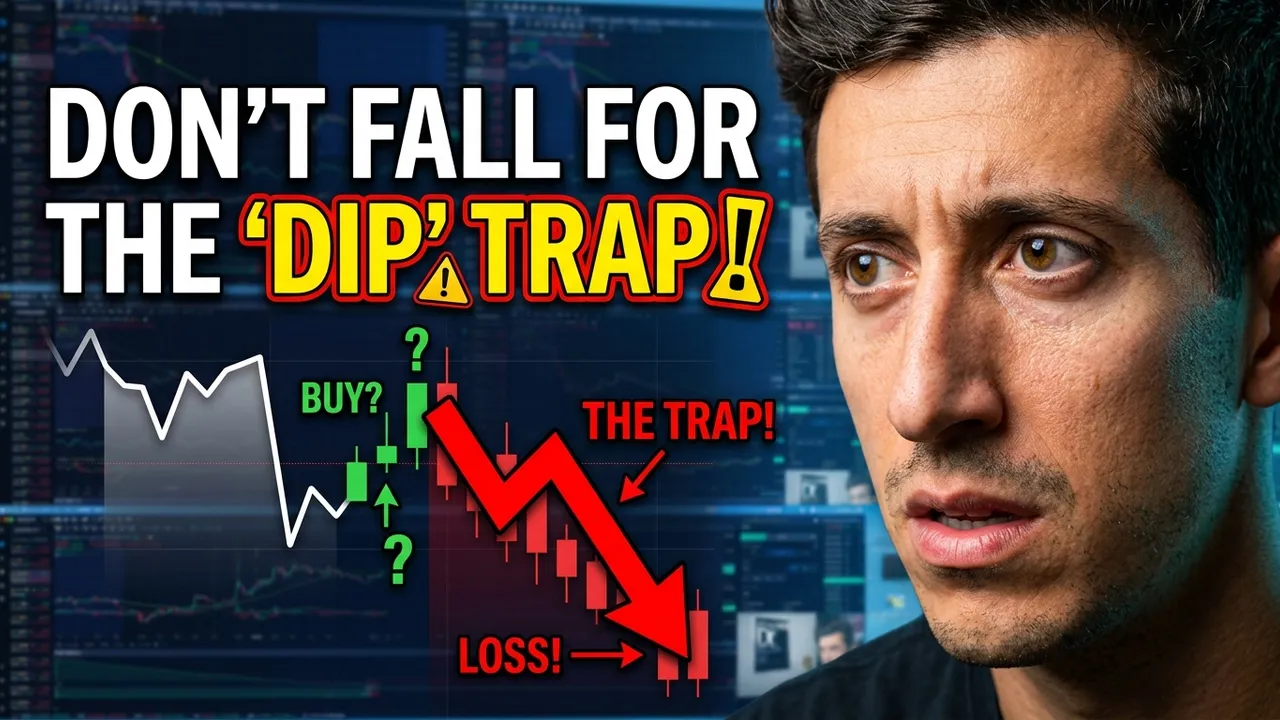
So, I'm going to describe a mistake I've made in the past before, and I make it still from time to time, but I want to see how many of you guys are currently experiencing this. So, this is from our live trading session on Friday, um where it got brought up, and I just wanted to see, you know, if you guys could relate. Micron. Micron at market open began to gap down. It sold off. When it gapped down, I bought the dip, right? I bought the dip to go long. So, I thought it was oversold enough. I think at this point it might have been down like 3 and 1/2 to 4%. It was a decent enough pullback. Um it it was technically oversold, but again, it was an early dip buy when direction has not changed. How many times have you guys made this mistake? And this is on the 5-minute time frame. So, it's very easy to now like look back and be like, "Oh, look, all you had to do was wait and recover." But when you're in it, like again, speaking from experience, you buy the dip, it keeps dipping, it keeps dipping, it keeps dipping. And what's a common mistake I've made in the past before, and maybe you have too. Again, I'm just going to describe this. You buy the dip, right? It keeps selling off, it keeps selling off. You're like, "Oh my goodness, right?" 10, 15, 20, 30, 40 minutes, you're in an hour into it, and you're like, "Oh my goodness, it's about to break below 920. That's a whole 'nother gap down. You know, ah, I don't I don't know if I want to tolerate this. Here." Okay, I know I bought the dip because I thought MU was technically oversold cuz it's a very, you know, bullish stock. So, I know it's oversold, and I initially bought it with the intention of buying the dip cuz I thought it was a decent deal, but because direction is going against me, although I already lost the decent amount, right? I'm going to sell it, and because it's selling off, I'm going to sell it here for a loss, right? I bought right around 950. I'm going to cut losses here right around 925, which is terrible because I should have cut losses much quicker in my opinion. And now I'm going to start shorting. Right? Okay. Open up a short. Boom. What happens? It finds its support. Direction begins to go against it. You're like, "Oh, man. What the heck? Like market's against me. Market makers are are watching me trade. Me and my 10 shares of MU. They're going to move a trillion-dollar market cap for my 10 shares of MU." So See how crazy that sounds? But again, "Oh, okay. I have a short. Now it's going up. It's going up. It's going up. I can't I can't handle this anymore. Right? Now it's going up. Now it's approaching 950. That's where I bought it at. Oh, man. I broke above the moving average. Okay. Cut losses. Close buy to cover short. I'm going to open up my long. We got We're above moving average." "Oh, what the Boom. Breaks back below 950. Drops lower lows, lower highs. Oh my goodness. Again, the market's against me. Market's against me. Direction's Direction's against me. I I bought the dip. Now the dip keeps dipping. Overall direction is still incredibly bearish. Lower lows, lower highs. Lower lows, lower highs. Lower lows, lower highs. Oh, last time we bounced at 920. It's going to bounce. It's going to bounce here. Add more. Boom. Drops to lows of 900. Oh, no. It's going to break below 900. Cut losses here. Boom. Recovers to 924. How many of you guys have ever gone through that? What's the first mistake? The first mistake is in my opinion, if you have some experience and you know how to manage or mitigate risk, the issue isn't buying the dip early if you have a reason behind it. Right? Kind of like again, I'm not saying that I justify it, but Tesla is aggressively oversold based off of recent patterns. If your intention is to buy the dip and your intention is to give it the time that it needs for it to recover because you see it as a long-term opportunity or potential swing trade great. Right? There There might be some stress in the meantime. You might have bought it early. There's more potential downside. But there's a reason behind it, right? You have intentions. Great. When it comes down to this specific trade, the first mistake that you can make is buying too much too early on. That's often the common mistake where the pressure of the trade going against you becomes too overwhelming. And the only way to change that is we've talked about this in the LPP lesson library. Again, this is all things that you can learn on learn about on your own. The whole point of the LPP lesson library is just again, to kind of educate beginners in a more structured way. The thing that I share in there is that the issue is not buying the dip early, it's with how much you buy it with. Like we've talked about it. You can start with you know, you might have $10,000. You might have $100,000. It's not about how much money you have, it's about your position size management. If you are buying before confirmation, in my opinion, your position should not be more than 20% of what you can buy that stock for or what you intend to buy that stock for. The reason why is that if direction continues to go against you, your first response should be to cut losses because it's going against you. It shouldn't be to add more. The initial reaction of wanting to add more is most likely because you are too emotionally invested in the trade. And you think that well, now it has to recover. You're adding fuel to the fire. Something's losing you money, you're going to now buy more and add more. You're only exacerbating the entire setup, right? Now you fueled something more money that's going to even losing more money. That's overall direction is against you. It adds to the emotion. It adds to the stress. And it adds to the inability to tolerate the time that it might take for the stock to recover. That is the first thing that I want to highlight. Position size. Second thing that I want to highlight is the change of plan, the overtrading. What is the mistake that we made? It wasn't so much that you bought early cuz even if you bought at $9, $950 and it kept dipping, maybe you didn't manage your risk appropriately. That's one thing. Cuz again, direction can continue to go against you and we have to accept that. And that's what we talked about in our live session when it was selling off. We're like, "Hey, MU has traded to lows of 800." It could have, right? Always think about worst case. Never think that it has to go your way. At least that's the way that I like to remind our beginner LPP traders. If you're always optimistic about it going in your favor, in my opinion, you're selling yourself the dream. Your focus should be to reduce the amount of money you give back in this market by position size management and by risk management right? So it wasn't the sec- the second thing that I want that that I want to highlight is it wasn't the initial entry that you bought in early. You knew you were buying early. You're buying as direction was still bearish. It was oversold, but direction was still against you. It's below the moving average. It's below the EMA. Literally everything is against you. You're just buying it because it's oversold. Again, that's not the main problem. The main problem is you bought for a reason because you thought it was a good deal and eventually you believed it was going to recover. Which again, in fact, it did. If your average price was right around 950, it got back to that average price. But the problem you did was you began to overtrade. Because of your lack of position size management, it put you in such a stressful position that you began to now revenge trade. Well, now I need to make my money back. I'm going to close my long position and now enter short, but then now market direction turned against you. Again, if all you did was nothing in the simplest way, you kept a small position, you allowed it to sell off, eventually as it recovered, it got back to 950, even if it got back to 940, at least at that point you would have recouped most of what you would have lost. And then at that point you can decide, "Hey, maybe I'll trim even more and or just close it out completely cuz I need to respect that direction is not in my favor." A very level-headed way to see this as a trade. But the single mistake that you made, probably the biggest mistake that you made aside from going in with too much position size too early on, is that you began to change and overtrade, right? You began to change your intention with the stock. You went from buying it because you thought it was cheap to now shorting it at oversold levels. Literally, you began ignoring the obvious and you began to change because your emotions were literally just overtaking your trades, your thought process. You couldn't think clearly anymore. And then as direction went against you on that short, it even fueled and added more to the stress and to the emotions. Now you really think the market is against you. Let me remind you, if you're trading with $100,000 or less, I would find it very hard to believe that they would move a trillion-dollar market cap, a multi-billion-dollar market cap of a company just so can lose 1 or 2% of your $10,000. That make sense? Like it's not about you. It's not about me. We're not important. Our focus is simple. Take advantage of opportunities where I can make more than I can give back. Put myself in a position in which I can tolerate the time that it might take for it to recover. And most importantly, if my intention is to buy the dip, to stick with that initial intention. To not change my intention because of my inability to acknowledge that I'm just not working well with the market today. Going from long to short, back to long to short, and then just every trade you take, it's a complete mess. You're simply digging yourself in a deeper hole. If you literally would have done nothing, it would have been better than doing everything you just did. And again, I've can reassure you I've made this mistake probably more than many of you have. Again, I've began uploading videos over 10 years ago on YouTube. And the single biggest thing that I've ever tried to focus on on my YouTube channel is not just focusing on Yes, let's focus on making money, but it's also keeping it. The single biggest mistake that traders make is giving back more than they actually make. Anyone can make money in this market. That's not the special part. But it only takes one bad trade to give it all back when you don't manage and mitigate risk. Well, what do you mean by that? You can grow your account from 1,000 to 100,000. Sure, maybe you trade options. I don't trade options. Maybe you trade meme stocks. I don't trade meme stocks. But again, we've heard those stories. But normally, how does it end? They never learned how to manage risk. Maybe they took a few good trades when market sentiment was a incredibly bullish, so the was in their favor. But then sentiment always changes. Market rotations always happen. And if you have an inexperienced trader now with more money, it doesn't make them successful. It just makes them maybe a larger target to possibly, again, just take one bad trade and give it all back. You're as only as good as your most recent trade. And that is why again, when I see some of our LPP traders getting started, when I see that they have amazing risk management, meaning that they might aim to make, right? Their their setup is 2 and 1/2 to 3% potential for profit and they manage risk at 0.75 to 1%. When they're that calculated and that structured, I love that cuz I know it's only a matter of time as long as they stay consistent and disciplined over a long period of time and focusing on quality setups, trade less, profit more, right? That the edge is on their side. If you literally do less, it can often be better for you. Now again, doing less doesn't mean managing risk. Ultimately speaking, it's easy for us to say that it recovered to 950 because we can see how it played out. But what if it was one of those very bearish days where it did fully sell off below 900. At that point, the only option when I initially bought the dip should have not been to add more or to back hold technically is you still have to have a max dollar loss or max percent loss. And if you don't have that, then again, it goes back to the same thing. You are only one bad trade away from giving back all that you gained. Ask yourself this. Why do you allow your winners to not run, but you allow your losers to run? Should be the opposite. Right? Allow your winners to run. Maybe you follow with a stop loss or trailing stop loss and allow it, you know, to continue to rally making you more money. And your losers should be strict. Every trade comes at some form of cost. That's the way that I think a lot of beginners should look at it. Every time you take a trade, what are you willing to risk dollar-wise? $50, $100. Every trade should have a hard stop. It could be percent, but it could also just be a dollar amount. But you need to figure that out. How do you figure that out? Well, first off, again, we have these little tools for you on our learn plan profit page. We have the risk to reward ratio calculator where again you can plan out your next trade by being able to enter your plan, the number of shares, and before you even take it, your max loss potential and your max profit potential, your risk to reward ratio based off of what you set up. If you can visually see that, "Hey, this trade if it goes wrong with a full position size, might cost me $400. Damn, I don't know if I want to take that trade." Then guess what? You don't take it. Or if maybe you need a more, you know, specific setup, then you formulate the plan and you wait for it to actually present itself. The next thing is how do you figure out your win rate? That is also something that we provide you that again you can take time to figure out. But the thing that I want you to actually take time to understand is again, with how much you are currently trading, with how much you are risking per trade, and many of you guys are not just risking 1% per trade. Some of you guys might be losing 2.5 to 3.75, but yet only make 1.5 to maybe 2%. You will never end up profitable if you are giving back more than what you make, right? And again, what's your risk to reward ratio? How much are you willing out of the dollar amount that you're trading with, the position size that you're working with, if you're trading with, you know, $5,000, how much are you willing to risk every time? Every trade comes at a cost. Like I said, is it 50 bucks, 25 bucks, 100 bucks? That is something for you to decide. But you need to make sure that the setups that you are taking advantage of align with your risk to reward ratio, right? The more favorable the risk to reward ratio, the better edge you have in being profitable. We all make mistakes, every day possibly, I mean, every week, possibly every day, right? That's not the bad part. The bad part is when you don't manage or mitigate those mistakes. And again, trading more does not yield you more money. We all know that right? So, let's recap. What was the mistake here? The mistake was not buying the dip too early, in my opinion. Some of you might say that, "Hey, well, you never waited for confirmation." I And I love that for you. Some people do wait for full-on confirmation. That would have been, you know, confirmation of reversal. And in the perfect world, I I do agree with you, but I'm okay with being a little bit more on the risky side and buying early, but correct, that is the price you sometimes pay where if you would have just waited for confirmation of a reversal, it would have been more favorable. So, I I respect that about you, right? But the first big mistake was not buying early if you did it with a decent or smaller position size, right? It was changing your intention. You went from buying the dip to go long to then shorting to then going against you to then going long to then going against you, and you began to revenge trade and over trade. If all you did was literally nothing, it would have been so much better. And again, if this is a mistake that you are making, you need to come up with a plan of action to help aid this. And does that mean that again are you going to cut losses quicker? Cuz again, every trade comes at some form of cost. Does that mean you're going to wait for confirmation? This is what you have to decide to do. No one else should be telling you how you should be taking these trades. But I want you to look back, review some of your previous setups, right? It could have been an overbought reversal where you went in short, but markets were still irrational. So, the direction went against you. What if you just stayed with it? What if you sized down on that position? And just gave it the time that it needed to fully sell off. A lot of the companies that we've called out as overbought reversals, right? A lot of the nuclear fusion energy companies. It was hard to short them when they were super hyped up, right? But eventually they all came crashing down. Oak lows are really good example of this. It's hard when direction is favorable and you can see that fundamentals don't align. But even at elevated levels, again, if you just do it with a more appropriate position size and or just wait for confirmation. Again just give it the time that it would need for direction to be favorable. That doesn't mean to be loose with your risk management or have no risk management. It truly just means to be more intentional. More intentional with your position size, more intentional with your risk management. It all needs to be intentional. But the same thing with buying the dip. I would love to look back and be like, "Hey I mean, no one knows how low the market can go." But buying it at $300 knowing that it was just at, you know, 450 does seem to be attractive. But again, it can get a a worse before it gets better. And I don't think enough beginners take the time to think about worst case, and all they think about is best case. So again, let me paint the picture for you. If you do buy the dip, let's say that you're a you know, a well-off fellow. I don't care if you're well-off. I don't think it really makes sense to be trading if you're a beginner with a lot of money, even if you have a lot of money. We all start from knowing nothing, and mistakes cost money, and I think that's important to acknowledge. But let's just say you buy the dip at What is it at right now? 311? 313? But let's say it sells off all the way down to 220. Stop loss? My profit target? 450 with 100 shares. Terrible risk to reward ratio, right? That means that if I buy here, my stop loss is all the way down here, and my take profits is right around here. I feel like that's realistically what some people would do, right? But then are they visually seeing what that downside actually looks like with 100 shares of Tesla. I want you to see that. $9,100 loss. Could you stomach that for a long period of time? Market's not on a schedule. It doesn't need to recover anytime soon. Obviously, this number is very pretty, but is it worth the risk? Just take time and work through it. How many of you guys have actually taken time to think and visualize both the good and the bad of every trade or investment you choose to make. And again, that's all like this is all free. It is on our LPP homepage, which again, this is to sign up for LPP. But even if you're not part of our LPP group, you can preview a live session, you can use our risk to reward ratio calculator. I want you to use all of it. I I hope that it just makes you more intentional. That's That's all I have. And again, if you end up wanting to be a part of our team, hell, you know, I'd be happy to have you, but I get it. Watching me trade live or joining our beginner lesson library, it's it's not for everyone, but if you want it, you can definitely join us. And again, it's a one-time payment for lifetime access, and it includes everything, of course. The daily live sessions, which means the daily live trading session at market open, which again, you can preview a recent one. And then you also get access to the LPP lesson library, which you heard me talk about in this. But I just I wanted to have this conversation with you guys. Probably super boring video, but I think it's these boring conversations that even just one to one of you, I think it'd be really cool for you guys to like acknowledge and to realize that you're not the only one making this mistake. That no, it's not the market that's against you or market makers are watching you. You're not that important. I'm not that important. It's not that deep. What is important is you're not managing your position size, you're not managing your risk, and you're changing your initial intentions when you shouldn't have you're getting emotional. Where literally, if you would have done less, it would have been better for you. But you never gave yourself a chance because you went in too heavy too early on, and that's your fault. So, what are you going to do to change that? We have an up-and-coming week, trading week, big earnings, incredibly volatile. Should be fun. Volatility means quick changes of direction. Maybe a lot of stress. What does that mean? Maybe you trade with less position size. Again, you don't have to go in with 100%. Get comfortable being light is what we like to refer to if you're part of our daily live sessions. So, I appreciate you guys' time. Just wanted to share some thoughts with you guys. And like I said, if you ever want to join LPP and/or just use our tools, second link in the description down below. Again, if you have any questions, feel free to reach out to us via Instagram and/or feel free to comment down below. I appreciate you guys' time. Hope that earned a thumbs up. Maybe share this video with someone you think would appreciate it or need it. And like always, let's make sure that we end the year on a good note. Take care, team.

Commentaires 0
Connectez-vous pour rejoindre la discussion.
Se connecterAucun commentaire pour l'instant. Soyez le premier à partager votre avis !