Burry also previously initiated short positions on Oracle, targeting the company's heavy debt burden and capital intensity
Contexte
"Burry also previously initiated short positions on Oracle, targeting the company's heavy debt burden and capital intensity."
Transcription Complète
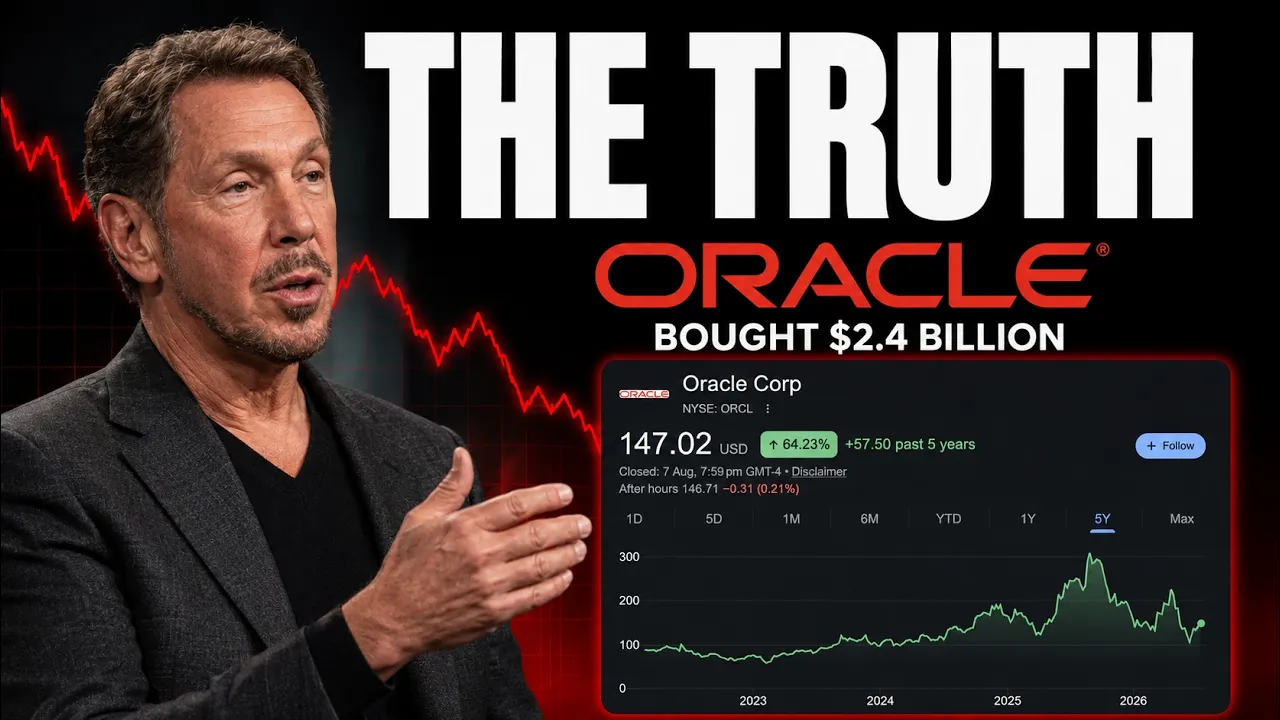
Good day to you, everyone. Welcome back to the channel. Today, we will talk about Oracle stock and whether this enterprise computing titan is sitting at an unbelievable bargain or facing severe structural risks. Before examining the major market fears surrounding its capital spending and short-seller activity, we need to establish the fundamental foundation by looking at three distinct reasons why investors continue to view Oracle as a compelling business. The first major reason to favor Oracle is the phenomenal growth trajectory of Oracle Cloud Infrastructure, commonly known as OCI. Over the past four quarters, Oracle has transformed itself from a legacy database software provider into one of the fastest-growing hyperscale cloud infrastructure platforms in the world. >> [music] >> In fiscal year 2026, total cloud infrastructure revenue surged 77% year-over-year to $18.1 billion, culminating in a fourth-quarter infrastructure growth rate of is the massive backlog of contracted demand. Oracle ended fiscal year 2026 with remaining performance obligations reaching $638 billion, which represents a 363% increase compared to the previous year. This massive backlog provides multi-year revenue visibility that few software enterprises in history have ever achieved. The second reason to admire Oracle lies in its compressed valuation relative to its pure-play cloud peers. >> [music] >> Following a steep stock price decline from its all-time high of $345 in September 2025 down to around $140 in August 2026, Oracle trades at a forward price-to-earnings ratio of approximately 22 times non-GAAP earnings. For a company generating 93% quarterly growth in cloud infrastructure, a forward earnings multiple in the low 20s represents a noticeable discount compared to legacy software valuations and competing hyperscalers. The third reason is Oracle's deeply entrenched enterprise software mode and expanding multi-cloud strategic partnerships. Over 90% of Fortune 500 companies rely on Oracle database management systems for their mission-critical corporate data, accounting, and supply chain logistics. Ripping out an enterprise database system is notoriously complex and risky, giving Oracle exceptional pricing power and sticky recurring software revenues. Furthermore, multi-cloud agreements with Microsoft Azure and Google Cloud allow enterprise clients to run Oracle databases natively inside competing cloud environments, accelerating database adoption across the entire industry. Hey everyone, quick pause right here. If you have not realized yet, the person speaking to you right now is a digital clone of me. I am making these breakdown videos in hope to bring new perspective and market analysis on stocks and broader economic trends. If you like what you are hearing, do consider giving me a follow as it helps bring this video to more people. Now, returning to Oracle's financial performance, total revenue for fiscal year 2026 reached $67.4 billion, representing a 17% expansion year-over-year. Total cloud revenues, combining infrastructure and cloud applications, grew 39% to $34 billion. Operating income for the full fiscal year reached $26.7 billion on a non-GAAP basis, representing an operating margin of nearly 40%. These top-line numbers demonstrate that corporate demand for high-performance computing power and artificial intelligence cluster capacity remains elevated. However, examining the top-line growth alone misses the crucial financial balance sheet shifts that have created significant concern across Wall Street. To understand why Oracle stock has declined by more than 50% from its peak despite record cloud growth, we must evaluate the immense financial burden required to build out this global cloud network. This brings us directly to the first major fear weighing down Oracle stock, which is the explosive surge in capital expenditure and the resulting negative free cash flow. Building artificial intelligence cloud infrastructure requires purchasing hundreds of thousands of advanced graphics processing units, securing massive electrical power capacity, and constructing high-density data center facilities across the globe. Unlike its mega-cap technology peers like Microsoft, Alphabet, and Amazon, which generate tens of billions of dollars in excess free cash flow from established digital advertising or enterprise cloud operations, Oracle entered this artificial intelligence build-out cycle with significantly lower cash reserves. In fiscal year 2026, Oracle's capital expenditure exploded to $55.6 billion, far exceeding original company guidance. Because capital spending outpaced cash generated from operations, Oracle's free cash flow plummeted into negative territory, ending the fiscal year at negative $23.7 billion. To fund this massive cash deficit, Oracle was forced to borrow heavily in the credit markets. Total debt ballooned to $129.5 billion, driving Oracle's debt to EBITDA ratio above 4.3 times. Financial leverage of this magnitude is virtually unprecedented among major technology hyperscalers, as competitors like Alphabet and Microsoft maintain debt to EBITDA ratios well below one. In July 2026, credit rating agency S&P Global lowered Oracle's credit rating to triple B minus, placing the enterprise just one single notch above junk status. Making matters even more tense, Oracle signed approximately $260 billion in long-term data center lease commitments that will begin taking effect over the coming years. Ratings agency Moody's highlighted that while other hyperscalers are expanding infrastructure, none are as leveraged or cash flow negative as Oracle while entering this expansion phase. Management has outlined plans to increase capital expenditures even further in fiscal year 2027 to $95 billion. If capital spending continues to outpace cash flow generation, balance sheet pressures could persist regardless of reported non-GAAP earnings growth. The second major fear driving market skepticism around Oracle stock centers on high-profile short-selling activity led prominently by investor Michael Burry of Scion Asset Management. Michael Burry, famously known for predicting the 2008 subprime housing crash, has been on an extraordinary streak of accurate macroeconomic calls over recent quarters. >> In the recent regulatory filings and disclosures throughout mid-2026, Burry has systematically built and expanded short positions against major artificial intelligence hardware and semiconductor companies. His active short book includes put options on Nvidia, expanded short positions in memory manufacturer Micron Technology at around $880, put options on industrial equipment maker Caterpillar, and short positions on the semiconductor ETF SOXX. Burry also previously initiated short positions on Oracle, targeting the company's heavy debt burden and capital intensity. Burry's core thesis centers on what he views as a massive structural disconnect between infrastructure capital expenditure and actual end-user revenue generation. Major technology companies are projected to spend over $700 billion on artificial intelligence [snorts] data centers in 2026 alone. Research from international banking institutions suggests that the industry requires over $600 in real annual end-user revenue simply to break even on this massive capital buildout. Furthermore, a substantial portion of Oracle's contracted backlog is tied to startup clients, including a $300 billion multi-year commitment from OpenAI. Critics point out that if frontier artificial intelligence labs face delayed monetization, funding bottlenecks, or demand recalibration, the massive capital investments committed by Oracle could face utilization risks before fully generating cash returns. Evaluating these opposing forces requires a direct look at valuation metrics and operating cash margins. On a non-GAAP basis, Oracle reported diluted earnings per share of $7.63 for fiscal year 2026, representing 27% annual growth. Based on consensus forward earnings forecasts of $8.05 per share for fiscal year 2027, Oracle trades at a forward price-to-earnings multiple of approximately 17.5 times. Comparing this forward multiple to historical valuation ranges shows that Oracle is trading near its lowest valuation levels in over 3 years. On a price-to-operating cash flow basis, Oracle trades at roughly 12 times operating cash flow, reflecting the solid cash generation of its underlying legacy software and database applications divisions. However, because price-to-free cash flow accounts for capital expenditures, that traditional metric remains negative due to current spending levels. Gross margins in the cloud infrastructure segment currently run around 45% compared to over 75% for traditional software licenses. As cloud infrastructure becomes a larger percentage of total revenue, overall corporate gross margins experience natural compression. Management anticipates that as newly constructed data centers reach full capacity, GPU utilization rates exceeding 97% will allow infrastructure margins to expand over time. In summary, Oracle represents a classic high-stakes growth debate. On one side of the ledger, investors see a premier database franchise with a $638 billion contracted backlog and cloud infrastructure growing at 93% annually. On the other side, debt levels exceeding $129 billion, negative free cash flow of $23.7 billion, and short seller scrutiny from investors like Michael Burry highlight undeniable leverage risks. Watching how effectively Oracle converts its record contracted backlog into high-margin cash flow over the coming quarters will determine whether current price levels represent a generational value opportunity or a debt heavy transition period. Thank you so much for joining me today. Please feel free to drop your thoughts in the comments below and I will see you in the next market breakdown.

Commentaires 0
Connectez-vous pour rejoindre la discussion.
Se connecterAucun commentaire pour l'instant. Soyez le premier à partager votre avis !