Others say buy them now before they double from here again.
Contexte
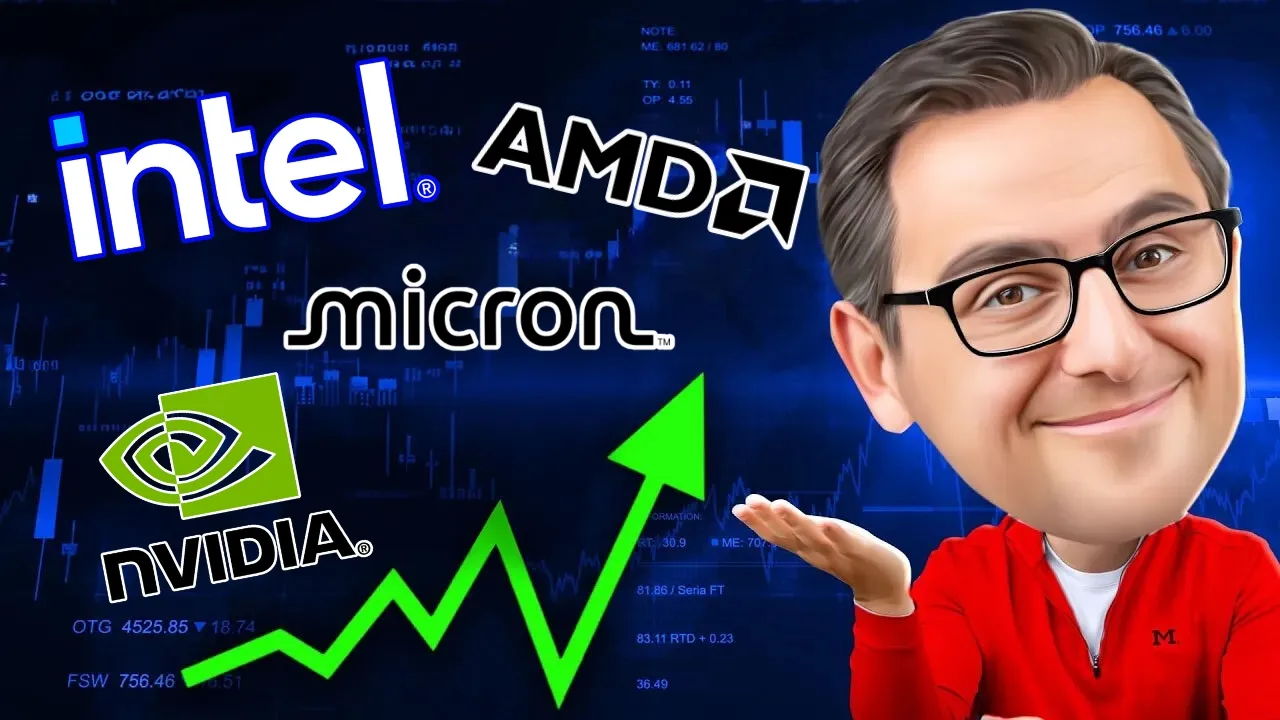
"The five semiconductor stocks that we are talking about today are up a combined 370% this year. Now, some investors think they're just getting started. Others say buy them now before they double from here again."
Others say buy them now before they double from here again.
Contexte
"The five semiconductor stocks that we are talking about today are up a combined 370% this year. Now, some investors think they're just getting started. Others say buy them now before they double from here again."
Others say buy them now before they double from here again.
Contexte
"The five semiconductor stocks that we are talking about today are up a combined 370% this year. Now, some investors think they're just getting started. Others say buy them now before they double from here again."
Others say buy them now before they double from here again.
Contexte
"The five semiconductor stocks that we are talking about today are up a combined 370% this year. Now, some investors think they're just getting started. Others say buy them now before they double from here again."
Others say buy them now before they double from here again.
Contexte
"The five semiconductor stocks that we are talking about today are up a combined 370% this year. Now, some investors think they're just getting started. Others say buy them now before they double from here again."
...at $20 a share, it's priced for bankruptcy or for a takeover... So, I do think that at that point it made a lot of sense.
Contexte
"...even back in the day, I sat there and said at $20 a share, it's priced for bankruptcy or for a takeover. And when it got to 17 a share, that's when people started talking about taking it over. So, I do think that at that point it made a lot of sense."
If this is correct on 175, don't you want to buy it at a discount?
Contexte
"So, I look at the saying, what price would you really want? If this is correct on 175, don't you want to buy it at a discount?"
Transcription Complète
The five semiconductor stocks that we are talking about today are up a combined 370% this year. Now, some investors think they're just getting started. Others say buy them now before they double from here again. And almost nobody thinks that they're slowing down anytime soon. So, today we're looking to see if they're actually selling at a price that is below the value we want to buy it at. Now, Intel is up 151% this year, the single biggest gainer on our list. So, let me explain what this company does in very simple terms. Intel makes computer chips. Think of a chip as the brain of a computer. It's what makes everything run. For decades, Intel was the company making the brain inside almost every laptop and desktop on the planet. That little sticker on your PC or your laptop that said Intel inside, that was them. But in recent years, Intel has fallen behind. Competitors like AMD made much faster chips at lower prices and took away market share. I think at one point Intel had 93% market share. That is down significantly now. Nvidia dominated AI chips and Intel missed that wave entirely. The stock was absolutely crushed for years. So why is it up 151% this year? Why is it up 5x in the last one year? Well, two big reasons. First, they have received a vote of confidence from both the US government who actually took an 11 billion stake in the company and Nvidia poured another $5 billion into Intel. Now, what matters far more is that the company actually started to show early signs of a successful multi-year turnaround in its most recent earnings. We covered it on our EM Plus channel showing the stock jumped over 20% in one day thanks to 7% revenue growth and a massive profit beat driven by gross margin expanding to 41 and a half%. And guys, that is not a small task. And remember, gross margin is the profit on every extra unit. It doesn't include overhead, doesn't include income taxes. It's just the profit on selling that one extra unit. Now, the question now is whether that 151% run has already priced in the recovery or whether there's still real value here. So, let's go find out. Guys, what's amazing about Intel is this is one of the stocks we use as a prime example for companies that can go sideways for a long time. It finally hit an all-time high after this recent surge. Look at this parabolic rise completely straight up, guys. It did not surpass the 2000 peak until literally the last few weeks. in the last few weeks. Let's see the exact date. Yeah, basically in May. Incredible, guys. One year ago was at $19 a share. Then it hit 100. That's 5x over 5x in one year. Absolutely insane. But is it actually making sense, guys? This company lost $3 billion in the last year. Three billion in cash flow loss. The 5-year average cash flow loss, 7.7 billion. We've talked about this. I own this company. And guys, I am not taking credit for this at all because this is an absolute market voting machine. Anybody who thinks that this is justified in terms of just a parabolic rise like this, you have to ask your question of is the company really five times better than it was one year ago or is the question was one year ago it was a deep value play. These are the things you have to remember. Don't follow price guys. $500 billion market cap and it does revenue in the last year of $54 billion. Nine times revenue. A lot of negatives here, guys. It's ugly. But look at this. This is why it's impressive. Their gross margin over the last year was 35% but the most recent quarter was 41.5%. Guys, it's very difficult to move gross margin and they did it significantly. And you got to remember this is a company that just a few years ago was making $20 billion a year consistently. So, this company has a lot of potential. It still has a great brand name and people still love it. So, let's go look at these ugly eight pillars. O 8 X's. How often do we see that? We don't see this very often, do we guys? Eight X's. Now, it doesn't mean you shouldn't buy it because of this, but at the end of the day, guys, this is a turnaround play. Everything is ugly. I'm not even looking at the eight pillars. Remember, to me, the eight pillars tells a story. What's the story here? The story is how shitty is this company? That's really the story. Like the questions to be asked is how bad is this? Like I said, great brand name. They're in a turnaround and the turnaround seems to be gaining some traction. It's a little early though, but even back in the day, I sat there and said at $20 a share, it's priced for bankruptcy or for a takeover. And when it got to 17 a share, that's when people started talking about taking it over. So, I do think that at that point it made a lot of sense. The question is, does it make the same sense at $98 a share? Now, before I get an analyst, I do want to remind you guys, if you're new to the channel, I go through a lot of data. It sounds overwhelming. And guess what? You're not alone. It's overwhelming for all of us at some point. It was overwhelming for me at one point. It was overwhelming for Buffett and Munger and everybody in the history of the world. The question is, if you're willing to put in just a little bit of time, you are you willing to do that in order to get better at this? Because you will get better at this. This is no different. Looking at a company is no different than looking at your personal financial situation. There's money coming in, there's money going out, there's debts, all these things. So, I made this all very simple for you guys. Back here on this key metrics page, I have an absolutely free PDF that'll explain all of these metrics to you, how to calculate them, what they mean. That way, we're speaking the same language. Because in order for you to get better, you need to be able to understand some certain things. It's not going to happen overnight, but it'll happen a lot faster than you think. And that's what we're here to do, to make everyone more knowledgeable and understand. And that's why I sit here and teach on YouTube. So, click the link below or the first pinned comment. We will have a link. Click it. Download the PDF absolutely for free. Trust me when I say you'll be a much smarter investor because of it. So, back to analyst estimates, guys. Big growth here for analysts. Now, they're sitting there seeing $4 per share in profit in 2030. Guys, reminder, when it the company was $17 a share, that's a lot. That's a four times earnings versus $100 a share is 25 times earnings. The key I want you to understand is price changes everything. You shouldn't follow this price going up and saying it's a better company because of that. That's not the key here. The key here is remember when the price changes so should your thesis about is it a good investment or not. The revenue growth 55 billion growing to 77 billion the next four years. These are all analysts. They have the same bias that you and I have. They're actually under a lot more pressure than you and are because they have to sit there and hit certain numbers and stay close enough to the market. They can't think differently unlike you. You're allowed to think differently because it's only your money. So I want everybody to remember that here. So what is the right price to pay guys? That's why we have stock analyzer tool. It's here to put the story and the numbers together. We're going to sit here and make assumptions about the future and it'll spit out exactly the price to pay based on those assumptions. So, let's see the last time I did Intel. It's probably recently since the stock has been flying. And I think I'm the only Intel shareholder in the world who's laughing at the recent runup. So, guys, first line, revenue growth for a 10-year analysis. I did 5 8 11% revenue growth, profit margin, free cash flow margin. I did 87 and 25. And I want to remind you guys that this is still lower than they were before this whole turnaround started. So, I'm still being, I think, reasonably conservative here. Keep keep in mind that Nvidia and AMD have much higher pro actually not AMD but Nvidia has much higher profit margins than this. Next one. What is the PE and the price to free cash flow that I'd apply to this company 10 years from now. Well guys, this is where it's an issue. If the turnaround works, it's probably 20 or more. The turnaround doesn't work. It might even be less than 10. So, we're really stabbing here in the dark. But the idea here is to pick a PE that you'd apply to this company 10 years from now if these assumptions all occur. So, I actually don't I actually think 10 is low because I had it on 0% originally. So, I'm going to go 13, 18, and 23. I think this feels like a good number because I I do think Intel will be around 10 years from now. So, the question becomes, what is the PE to apply to that? And then finally, my 9% no margin of safety desired return. This guy's you got to remember this is not the price I want to buy it at is to sit there and say, okay, what's the intrinsic value here? I want to have my margin of safety and buy at a lower amount. So, if you have stock analyzer, make sure you increase this 9% desired return to a higher number. I hit the analyze button. The stock's currently at 98 bucks, guys. Low price of 14, high price of 99, middle price of 45. So, do you see how a year ago when it was $17 a share, how that changes all these numbers? Not in the sense of just in terms of the color. This becomes all green by a lot. That's the key here. If you pay the wrong price for a even for a good story, you're going to have a bad return. If you pay the right price, you're going to do very well. Now, guys, a friendly reminder to everybody who watches this, and it's funny, I'll see some comments and say, "Well, your title says this." I repeat, the title is not to be taken literally. We're here to play a YouTube game to get out there to people so we can teach our lesson inside. Do not take our titles literally. By the way, this title's probably changed eight times since you've watched this video. I have no idea what the title is as of right now. So before we get into Nvidia guys, I want to take two minutes to explain why semiconductor stocks as a group have been on such an extraordinary run this year. Because I think understanding the why will help you make a better decision about whether to buy or not. A semiconductor is basically a tiny chip smaller than your fingernail in most cases. That's the core ingredient in almost every electronic device on Earth. your phone, your laptop, your car, your microwave, the servers running the internet, all of them need chips to function. There's certainly no AI without chips. There's no cloud computing without chips. There is no modern economy without these chips. So, here's why this year has been so explosive. The AI boom created an enormous surge in demand for the most powerful chips available in the world. Every company that is building AI needs massive amount of computing power. Nvidia makes the chips that do that work the best, which sent their stock soaring. But the ripple effect hit every chip company. AMD is competing with Nvidia and AI chips and gaining real traction with major cloud customers. Marvel makes specialized chips used in data center networking and AI infrastructure. Micron makes the memory chips essentially the short-term storage that AI systems need in order to function. And Intel, which has been struggling as a company, is benefiting from the broader AI push to build chip factories on US soil. Now, these five companies combined are up 370% year-to- date. Intel, as we said, is up 151%. But Marvel is up 85, Micron's up 68, AMD 61%, and Nvidia, despite being the most talked about AI stock on the planet, is actually up the least of the five this year at just under 6%. Which is one reason why many people are now calling Nvidia a value play, which makes me laugh uncontrollably. But we're gonna actually find out if that's true right now. After running up over 800% in two years, Nvidia stock has pulled back and bounced around while the rest of the chip sector has caught up and surged. Deep Seek rattled the AI narrative at one point, raising questions about whether AI models really need as many Nvidia chips as everyone already assumed. And the massive AI capital expenditure spending by Amazon, Meta, Microsoft, and Google has investors asking a very logical question. When does the return on all that spending actually show up? Because if it doesn't show up, what are they going to do? They're going to stop spending. What does that mean? Less chips. Who sells them those chips? Nvidia. These are all legitimate questions. The bull case is that Nvidia's Blackwell architecture is the most advanced AI chip ever built, and demand continues to outpace supply. The bare case is that valuation still requires extraordinary assumptions about the future. So, let's run the numbers and find out which side our stock analyzer actually lands on. It is a $4.8 trillion company, guys. Like I said to you, look at these profit gross margins, 71%. Intel, it's 41.5%. Bottom line margin here. Look at this growth. I mean, they're doing 55% bottom line margin. That's after taxes, after overhead. Intel's only doing 41 and a half% before taxes and before overhead. That's a huge difference, guys. Massive cash flow. 97 billion dollars last year, net income of 120. So, you can tell they're investing in themselves as well. High returns on C. I mean, guys, what do you want me to tell you? This the company's incredible. They have very little debt. They kill it. They're the leader in chips right now. There's nothing left to be said about this company. It's absolutely incredible. Let's go to the Let's go to the eight pillars. What I expected, all checks except for valuation, guys. Now, keep in mind the 5-year price of free cash flow and the 5-year PE is a little skewed here because of how much higher. Look at one-year free cash flow is two and a half times higher than their 5-year average. So, this is a little misleading. Usually, it's not that close to the number. Usually, it's very close to the number. The five-year and the one-year are reasonably close. So, we look at these numbers. I mean, I would not put too much um effort into sitting there and justifying this. I would just sit there and say, "Listen, their massive growth here is amazing. It's clear. The question is, will it continue?" So, let's go pull up our analyst estimates and see what they think. Guys, you can see here, still big growth, 480 to 1327 per share in profit. But remember, if this is a premium business worth even 25 times, 25 time 13 is what? $325. Okay, $325. four or five years from now. The stock is currently at 195. So, still some upside if analysts are right. And still some big growth in revenue from 217 to $684 billion according to analysts. Huge upside. Oh boy, this one's hard. So, here's what makes Nvidia hard doing to do to think about. It's pricing in for amazing growth. Guys, what happens if amazing growth doesn't happen? I want to remind everybody about all the stories we had about electric vehicles, about Tesla specifically with Elon Musk, about cannabis, about all these things that everybody said was for sure going to happen and then it didn't. And even if it does happen, is it already pricing in all those gains already? If you had a bunch of top tier athletes in high school, are you going to go pay them NBA or professional sports kind of money when they're in high school? No. Why? Because they haven't made it yet there. Would you pay them more than some guy, some chess nerd like I was? Of course you would because they have more potential of getting to the the pros than I do. But at the end of the day, you still can't overpay. You can't pay too much for something that you're waiting for it to happen. So here are the assumptions I made on Stock Analyzer for Nvidia in my most recent attempt. And you're going to sit there and say, "Paul, these assumptions are very low." I get it. But I did go higher on the high side. 10-year analysis, 10, 15, and 25% revenue growth. profit margin 30 37 and a half and 45 lower than they recently did but I have to assume that as more people enter the market as AMD takes away market share profit margin will hopefully come not hopefully but it'll probably come back down PE I had 20 24 and 28 and my 9% return now guys I want to remind you I don't know if I necessarily agree with all these numbers here some might be too low some might be too high it is very difficult on companies that have massive runup very quickly because you don't know if it's sustainable if you've Ever bought a stock cuz everyone was talking about it and you had FOMO? We've all been there and then we watch it crash. You already know that hype is not a strategy. This is why Everything Money built software that helps you cut through the noise and focus on what really matters, the underlying fundamental value of the business. Our stock analyzer tool walks you through the real numbers. The eight pillars checks the fundamentals and together they help tell you whether a stock is worth owning and what you should actually pay for it based on your assumptions. You stop chasing. You stop reacting. You start making decisions based on fundamentals and value, not on hype and excitement. And when the next hot stock comes along, you'll know exactly whether it's worth your money, your hard-earned money or not. You don't have to be a stock market expert to do this. In fact, being one of the so-called gurus is probably going to hurt you. These tools do the heavy lifting. You just have to be willing to look at the numbers and understand what you're buying. So, start a 7-day trial for just $7. Click the link in the description. Get full access right now. Guys, I have a low price of 83, high price of 513, middle price of 175. So, I look at the saying, do you want to buy a company for just 9 or 10% return? Just buy the market. So, I look at the saying, what price would you really want? If this is correct on 175, don't you want to buy it at a discount? I just look at this and for me, and this is for me, it's a little bit harder. So, guys, we're not going to do a full analysis on the remaining three stocks today, but I want to show you something really useful. The stock analyzer results for those three stocks, AMD, Micron, and Marvel, because I think seeing where each one lands relative to their fair value tells you a lot about which of these five might be the most interesting opportunity right now. Now keep in mind doesn't mean any of them are opportunity. It's not like there's five stocks and you have to pick one of them. You can just pass. There are tens of thousands of companies own out there. Now I highly recommend you have a conversation in our community about the most pro most attractive potential ideas. Bounce your thoughts off each other. That's the whole point of having like-minded investors together. So let me pull up AMD real quick. So guys, here are my assumptions. You can pause the screen and take a look at it. But my assumptions lead to a low price of 42, a high price of 486, a middle price of 160, and the current price of 340. So, not looking too hot there. Then there's Micron right here. My assumptions are all red. The stock's at 579. I have a low price of 168, high price of 540, middle price of 300. Again, a little tough there. Final one is Marvel. All of my assumptions right here. The stock's at 163, low price of 30, high price of 112, middle price of 60. This actually might be the worst one out of all of them. So remember guys, no matter how great a businesses, how exciting the story could be, the price you pay will determine how successful you are from an investment standpoint in the long run. So make sure you understand what you're buying and then pay a reasonable price for it. Ignore all the noise around you. Ignore the stocks shooting up parabolically. Now, one last thing. If you enjoyed this video today and you want to see a breakdown of all the 12 moves I am making in my portfolio right now, the strike prices, the reasoning, the full breakdown, click right here to watch that video. Thank you for your time.

Commentaires 0
Connectez-vous pour rejoindre la discussion.
Se connecterAucun commentaire pour l'instant. Soyez le premier à partager votre avis !