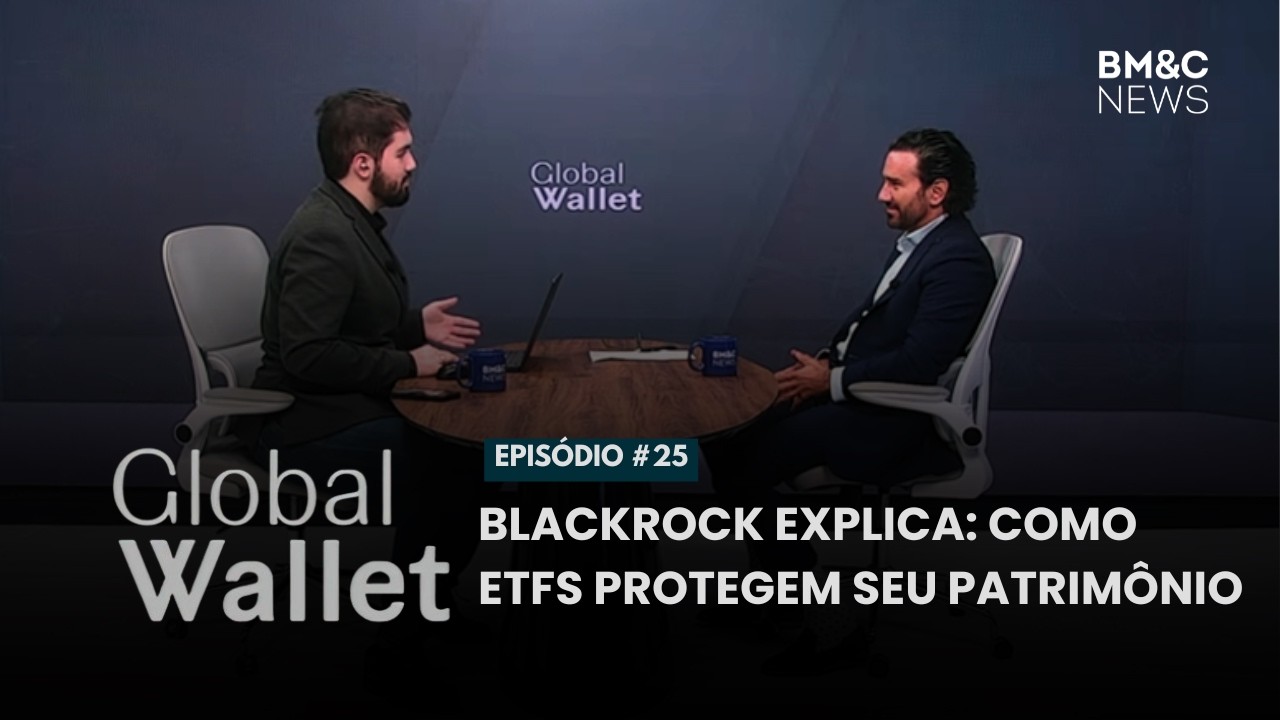
BlackRock e ETFs: por que eles são o futuro dos investimentos internacionais | GLOBAL WALLET

- Rendement de la vidéo
- —
- Appels
- 1
- Achat / Vente
- 1 0
- Publié
Recommandations
L'entrée est le cours de clôture de l'actif à la date de publication. Le cours actuel est la dernière clôture enregistrée.
-
Entrée $161,89 07 sept 2026Actuel $161,89 04 sept 2026Résultat +$0,00vs. indice +0,5% SPY −0,5% sur la même période
Citer cette recommandation Voir la vidéo source * †
Contexte de la transcription source
…e peso, >> you know, it makes sense for you to diversify and to invest internationally, you know, to hedge your risk. And I tell her, since you're not a an investor that is going to buying and selling here all the time, keep it simple. So, buy maybe an ETF that gives you exposure to all the markets in the world. the Aqu for example all country world index you invest you know proportionally and depending on how big the the capital markets of each country are are and then you can do one for fixed income as well and then you decide okay given her age da da da this much in fixed income this muc…
buy maybe an ETF that gives you exposure to all the markets in the world. the Aqu for example all country world index
Contexte extrait par IA So, buy maybe an ETF that gives you exposure to all the markets in the world. the Aqu for example all country world index you invest you know proportionally...
Transcription Complète
[music] [music] Well, global news investment Black Rock. So, Nicholas, it's such a pleasure uh to have you here. Thank you so much, >> Rafa. Thank you for having me here. So uh uh I would like to start asking about um the the the size of back rock nowadays. You guys are the largest uh um management company in the world, asset management company in the world. How how is that? I mean it's you know about the size of it. It's like 15 trillion. I I don't know how many money you guys manage nowadays. >> Yeah. So um yeah, we we we're the largest um uh we manage 15 trillion. Um but the most important thing is like none of that money is ours. >> This is the money of our clients and we manage that money, you know, in a fiduciary way to maximize uh the returns and the the financial future of our clients uh around the world. So this is really money that we're managing for a government, for a central bank, money that we're managing for pension funds, money that we're managing for insurance companies, money, money that we're managing for other asset managers, >> uh money that we're managing for individual investors. um the ETF platform also a tools for anybody from a central bank, a sovereign wealth fund, a pension fund to our grandmother to invest in the market >> and that how uh uh important is ETFs in this in this um on this whole um system that you that you set. So, so uh so we manage 15 trillion our ETF business and the the our brand of ETFs is called Aishers right um so Aish is about six trillion six and a half trillion dollars in in assets so call it um you know something like 35 40% of um of uh of the assets and a big part of the growth a big big part of of the growth we're seeing ETFs and I is going very very fast. >> So, um like last week I was um talking to to this friend of mine um he's an analyst of the financial market in Brazil and he said like um ETFs are the future of the investments. Do you agree with him like why it's so important to like to the investor to look look in the ETFs and like you should have um some share of it in your your wallet. Why is that? May maybe you know if we just go to to the basics what's an ETF you know ETF exchange traded fund so it's a fund that trades in the stock exchange and inside this fund it can be uh equity it can be stocks there can be bonds there can be commodities there can be digital assets there can be >> a mixture of them Um, so, uh, and maybe, you know, and we'll get there, but like I honestly believe like, you know, ETFs is one of those inventions of something that is simple, >> but really revolutionize an industry. And, um, Rafa, an analogy that I'd like to to give to show kind of like the the transformational attributes of ETFs compared to another invention. This is before you and I were born. >> Um but uh but this this invention is the uh container. So, you know, the container, you know, those boxes, you know, >> long, high, wide. Uh, until 1959, there were not there wasn't like a um people didn't agree on what should be the size of a container. So, people move boxes around. Some boxes were huge, smaller. >> The container was the standardization of two sizes of containers. If you look all over the world, there's two sizes. The long one and then half of that. >> Mh. >> Um something simple which is let's just agree on the size of this container. It reduce the cost of trading in the world by half. >> That's crazy actually. So now, so you take, you know, a container from a factory near Shanghai and goes to a truck to a train to a boat >> to the coast of Brazil, you know, in a train or in a or in a or in a truck um to a warehouse, >> you know, that's a big invention and that's simple. What's you know, what is it is just agreeing of on three dimensions, >> right? >> Yeah. uh ETFs something simple exchange traded fund it's a fund there have been funds for a while you know we know mutual funds right yeah >> uh what's the difference with this one it trades in the stock exchange >> now when you look at you know what's happening with ETFs you know >> we have six trillion it's an industry of 20 trillion dollars >> um when you look at the growth of the asset management industry um and there's two types of type of instruments in the financial in the in the asset management. You have instruments that trade that have liquidity, >> liquid instruments and then you have illquid assets or or alternative assets, think of private credit, venture capital, real estate, right? uh when you look at this part of the market of the asset management industry and [clears throat] you look at the what's like the rappers and how the rappers are growing you look at at uh at ETFs and ETFs are growing extremely fast and what you're seeing on the other side is how mutual funds are losing and losing and losing and losing assets basically and this is the vision and the direction of travel ETFs are going to be the rapper of choice for everything in the liquid world. >> That's great. >> That's that's that's the vision. >> Yeah. Yeah. Because uh um there's something in ETFs um that's about the the you know the the benefits of it for the investor. So he can like um put his money um to someone that probably it's more experienced or you know breathes the the the air of financial market every day and he can like um take care of of his life like without caring about um how the the money it's it's being managed. you know, that's why he should like have a a a big uh fund with him, a big company with him that's going to be important. So that that uh with that said, how important is for this investor to when he's choosing the ETFs to look to a company like Black Rockck and trust in you guys to to manage his money? >> Definitely. Definitely. So something that is important to mention Rafa um I mean the ETF industry is also evolving [clears throat] >> and it's been a little bit of a journey and now there is more products more types of products >> um some products that are simple cheap diversified and then there are somes that are they have a little bit more spicy sauce that can be a little bit more volatile. So I think it's important to to classify qualify different types of ETFs, >> different exposures because now as I said, anything that is liquid, you're going to start seeing it in the in the ETF. There's active ETFs right now. So what we when we used to think about active mutual funds, now there's active structure nodes, right? that have options [clears throat] inside that have leverage. You know they have now you see ETFs that are one time lever two times lever the Tesla security the stock lever one two times inverse one two times those are volatile and those are more risky so not all ETFs are for you know uh you know an investor like what you mentioned you know if I tell my mom my mom says hey what should I invest what should I do it's like well she lives in Colombia right so my message [clears throat] to her is well >> you know you live in Colombia you have a lot of exposure in Colombia already, you know, where you work, your salary, the house where you live, the macroeconomic environment of Colombia, the effects of the peso, >> you know, it makes sense for you to diversify and to invest internationally, you know, to hedge your risk. And I tell her, since you're not a an investor that is going to buying and selling here all the time, keep it simple. So, buy maybe an ETF that gives you exposure to all the markets in the world. the Aqu for example all country world index you invest you know proportionally and depending on how big the the capital markets of each country are are and then you can do one for fixed income as well and then you decide okay given her age da da da this much in fixed income this much but that's kind of simple plain vanilla >> but then you know you go to the other side of the spectrum right and there are you know ETFs that have one security inside call it Nvidia Tesla uh and then you know it has lever it has inverse those are a little bit more they could be a little bit more volatile and mod so so we gota especially because the the ETF is evolving so much >> there's now more ETFs than there are individual stocks that trade in the exchange >> that's great >> so you can find everything and so back to your question why Black Rockck right yeah so so for example so um we we we have six trillion six and a half trillion dollars in in shares in ETFs um you know anything new that we launch we believe that is bulletproof right so we don't launch everything we launch the things that we really do think uh that makes sense right so um this is a business of scale right ETFs are all another feature of ETFs is low cost >> right people you know they're not expensive you know when you compare what you pay for other investment vehicles instruments so it's a it's a it's um is a business of scale. So, you know, companies that get into the ETF business, they only start making money when they grow a lot. >> Yeah. >> Uh so, you know, a lot of some strategies are like, let's throw a lot of stuff, many ETFs uh to see what sticks to the wall >> um and what gains a lot of assets so that they're profitable, right? So people so people are are you know other providers that are new can come up with a lot of innovative ideas that might be a little bit risky but [clears throat] they're just doing it you know with intended to grow fast and and be profitable. So you know I think you know a company like Black Rockck that has so much reputation um and so much at stake you know we're very conservative in how how we how we navigate new products uh and the products we we have in our platform. >> Yeah. And you and you said like uh at the beginning that that there are like these two concepts right now in the ETFs that you have like the active investing and passive investing. >> Um you guys like prefer to to to beware in in this passive investing or active invest or both both. Yeah. Yeah. So Rafa a little bit kind of like the the journey that has been happening with so you know if you go eight years back >> and you thought of ETFs people associated them right away with an index >> right >> BESPA S&P 500 the Aqu and an ETF that tracks that index low cost um is been evolved evolving uh where now you can have active ETFs but now maybe the way to understand active ETFs is let's call it for a second non-index ETFs >> so what do you have here then you have exposures that are not index so think of maybe a money market fund you know uh it's not active but it doesn't follow an index maybe you have commodities like gold >> like Bitcoin like Ethereum premium. Uh it's not an index. It's not active either. It's not an index, but it's in the active category. >> Yeah. >> Right. >> Um and then you have active ETFs that are growing as investors realize what are the benefits of ETFs compared to mutual funds. So money that was in active mutual funds because they believe and like the active strategy that is trying to outperform beat that index or beat that benchmark. >> Mhm. >> Now they prefer to buy it in the wrapper of the ETF. >> Right. >> And I'll go into why in a second. >> Yeah. Uh uh and then there's other kind of active ETFs which are the ETFs that are kind of doing the same thing that traditionally structure nodes have been doing. >> Yeah. >> Which is there's a structure node that off offers downside protection. Those are called buffer ETFs, right? >> There's ETFs that generate income by by um by selling options, right? So it's called cover calls. You generate income. you give up a little bit of upside if if that asset goes goes up above a certain level but it's generating more income. So that's what structures notes do. >> Now people prefer to consume those structures with options in the in the ETF because it's cheaper and because it's it's liquid, >> right? So uh we are so we we we we're in all you know we participate in in in you know in in all the different types of ETFs >> whether it's a traditional indices >> then there's like you know parts of the of of like sub indices or or or or slices of these markets no I think >> there's single country ETFs right so a for Korea which is super in you know because of AI is super >> um is return like you know 200% % over the past two years. Yeah. >> Um Brazil, you know, we have ETF for Brazil, we have an ETF for Latin America, we have an ETF for semiconductors, you have an ETF for biotechnology, for AI. So, you start kind of breaking the market in in in um in slices. Um >> just like a big pizza. just like a big pizza >> and you start to to exactly >> to slice it up >> and then so so yeah so ETFs can come from hey I just use them like I'm telling my mom like hey I just buy two invest abroad buy the aqua and buy the the app uh or sophisticated investors like pension funds you know which use ETFs as cheap liquid transparent building blocks to build active strategies of asset allocation. >> That's crazy. That's >> um That's so it becomes like a [cough] like um like a Lego become like a Lego, >> right? Like like a like you build portfolios, big castles with all the different uh pieces. >> That's awesome. And uh um Nico, you are the head of Eyesshares for Latin America and institutional clients in the US. Um what is your vision for Latin America in this whole market? Uh um what do you guys think about um this this you know huge territory? We have like a lot of countries. What's your vision about that? >> Yeah. So Rafa there is um a ETF growth in Latin America has two dimensions. There's two worlds. the first one and and I've I've been working with uh with ETFs in Latin America for for 20 years. Um and this is kind of what I've been seeing for the most part for the past 20 years. I think that the second part that I'm going to talk about is something that we're starting to see in Brazil >> and we're probably going to start seeing in the rest of Latin America, which is something that we've seen in developed markets, right? But I would say that for the for the past 20 years, the role of ETFs and the growth of ETFs has been about around this journey of Latin American investors and people. And when I say investors from a central bank to a pension fund to an asset manager that distributes their mutual funds to their people to insurance companies, family offices, multif family offices, advisors and individual people is being the the instrument of choice to invest outside of their markets to invest abroad. >> And that's been a journey, right? different different countries are in different places and we can talk a little bit about about about why and the different and the different realities. Um but every country in Latin America has gone from investing almost everything locally >> to start investing abroad, right? Um for example, when I started my career, I started my career developing the ETF business in Mexico. >> Mh. in 2006 at that point um when you look at portfolios of the average person in Mexico >> 5% invested internationally 90% in Mexican fixed income and equities 5% invested abroad today 20 years later it's more like 15% right you've seen pension funds in in Mexico you know when I started investing zero internationally now they invest around 25% in 50% in in in Chile, 55% in Colombia, 50% in um in uh in Peru. And what they found is that because of the attributes of the ETF, you know, low cost, liquidity, diversification, transparency, ETFs have been the instruments of choice to build these international portfolios. >> All right. Yeah, >> Brazil, similar story. It's just slower. >> Biggest market in Latin America. >> Yeah. >> Uh, by far >> 200 million u people. It's two 220 million people um lives in Brazil. So have a huge market. There's a there's an economist um called Marcos Isboa. Um he's he was a CEO of uh Uniu here in Brazil >> and he says um Brazil it's not a poor place by accident. There was a lot of work to make him like this >> because there's a lot of uh territory there's a lot of people and everything that you like seeds grows you know and it's crazy. It's a huge market but it has to evolve. I mean it's crazy right? >> And Brazil is is very local. You guys are very self-sufficient right? >> Yeah. Um, and you think about it, you in Brazil, you guys make airplanes. >> Yeah. >> You guys make submarines. >> Uh, you guys are, you know, a little bit kind of, you know, self-sufficient, right? You know, >> uh, the Americans make you get a visa when you go to the US. You make the Americans, uh, get a visa when they come to Brazil. Yeah. >> So, the Brazilian is very, you know, very nationalistic in that sense. The capital markets is also a little bit like that. So, Brazilian investors traditionally um most of their portfolio is invested in in local assets, you know, in in fixed income. So, this this process of internationalization in Brazil, you know, we're seeing it, you know, slower, a little bit behind than in the rest of um of of of Latin America. Part of it is because you guys are so big and and your local markets are so big and also sophisticated. Um part of it is because interest rates in Brazil have been so high for so long, >> right? >> Um but yeah, so the number one reason why ETFs have grown so much in Latin America has been uh in this journey of international diversification that we've seen across all clients in the whole region. >> That's number one. The second one where we're going to start seeing the next layer of growth are going to be ETFs with local assets. >> Right. >> So local equity of of Brazil, of Mexico, of all the countries and local fixed income. >> Right. >> Right. Traditionally these assets the way people access these assets is through mutual funds or buying the bonds directly. >> Mhm. >> That's going to that's that's going to change as the wealth industry continues to evolve you know places in Latin America the same way that they've evolved in developed markets in the US. Mhm. >> And this is around how what's the business model of the financial advisor. >> Mhm. >> Right. >> So um traditionally financial advisors their business model has been they manage a portfolio for their clients. >> They don't charge the client. They don't tell Rafa I have this nice suit because uh I charge you. Mhm. >> No, you don't see what you pay me because who is paying the advisor are the products that this advisor is putting in your portfolio. >> Yeah. >> Right. >> And that's kind of uh um weird for the investor in in a way right? >> It can create conflicts of interest, right? >> Like it's biased. >> Am I b building the best portfolio? >> Yeah. for you because who you are and what the products and what they view around the products or because this portfolio those products pay me the most. >> Yeah. >> So it creates a little bit of conflict of interest. If if part of their decision of why I put you in a product versus another one is how much money I'm going to make versus doesn't make sense for you. That creates a little bit of a fiduciary problem. Right? So what's happening in in in in markets of is um whether it's from a regulatory perspective the regulators kind of saying >> you cannot get paid >> with products or because the end investor is becoming more sophisticated >> and he or she is questioning how come Rafa my whole portfolio is with this asset manager and this mutual fund all of it are you guys the best there's nobody else. >> Yeah. >> Um >> they start to question. >> People start questioning. Hey, I hear that ETFs are very liquid and cheap and tax efficient. Why don't I have ETFs? >> Yeah. >> Right. >> Because that's the thing. ETFs are cheap, low cost. They don't pay economics to the advisor. >> Yeah. >> Right. So something that is happening is that as opposed to um the financial advisory community making money off the products, the model is changing to something that is called Febase, >> right? >> Or advisory, which means Rafa, uh now I help you with your portfolio. Um, I got to charge you something because, >> you know, I got to get my one suit every once a year, right? So, you know, and I got to pay my rent and it's >> got to pay the bills. >> Exactly. And I I'm offering value to you right? >> Yeah. Yeah. I mean, it's it's a job. >> Exactly. It's my job. It's a job, you know. I'm not a I'm not a charity, right? >> Yeah. Yeah. Yeah. >> So, yeah. I didn't used to charge you in the past because, you know, but now I'm going to charge you. So, I'm going to charge you uh a a percent, you know, a number, you know, whether is 1% or half a percent per year, whatever the number is, um to manage your assets. So, if I have 100 and I charge 100 beeps or 1%, you know, I'll charge you one. >> So, that so that's how you know you're paying the advisor now. >> Yeah. >> But the advisor is promising I don't make money off any of the products. >> Yeah. My interest is for you to grow the demand. >> We have the same interest. >> Yeah. >> My interest is to do the best I can with the products that I think makes the most sense for your portfolio, >> right? And to off, you know, and to give you return based on your, you know, profile and and risk appetite. >> Yeah. >> So, and ETFs then because they're so cheap liquid transparent efficient they start becoming a bigger and bigger and bigger part of the portfolios. So that's you know one of the reasons why ETFs are growing so much >> right is because of this this tendency in how money is being managed for people around the world. So now you know when you have an ETF and you say oh I can also before it's like oh I don't invest in ETF because I like active strategies like well now you can have active ETFs >> that try to beat a benchmark. So you like that strategy okay it exists in a mutual fund but it also exists in an ETF. What do you prefer? >> Before people prefer the mutual fund because that's how they were getting paid. >> Now there also mutual funds don't don't pay you. They're called the clean share classes and they're cheaper. >> But then you start comparing should I buy a clean share class of a mutual fund or an ETF >> and then you start seeing the attributes of the ETF. Guess what? The ETF I can buy it at any point during the while the market is open at the price that I'm seeing. So I I get what I see when I see it. And a mutual fund, you put an order, you don't know at what price you're going to get it. It's at the price at the end of the day. The NFB, the net asset value at the end of the day. And markets have become very very volatile. So now people are saying like, well then the and the ETF in the US in particular is more tax efficient. In Latin America also there's different places where ETFs are very tax efficient, but in the US the ETF is more tax efficient than the mutual fund. So now if you don't need the retro session, the payback from the mutual fund and the ETF is so much bigger. That's why you're seeing that all this mutual fund industry, you know, for assets that are liquid >> is converging in the wrapper of the of the ETF. So that's what we're going to be seeing in Latin America, you know, in the in the future, which is kind of how the wealth management industry evolves towards feebase. Mhm. >> We're starting to see a little bit of that in in Brazil uh with all the independent advisors obviously the multif family offices that's how they you know their business model um and as there is more more money that is managed like that and a big chunk of the portfolios are are going to be local assets we're going to remain to be local assets you know then there's going to be more appetite for local assets ETFs and that's going to be the second area of growth in of ETFs in Latin America. >> That's great, actually. So, uh we're going to have a quick break. Uh uh up next, we're going to continue all this this um talk about ETFs and of this world of investments of the future. Actually, ETFs are the present, but also the future. So, uh we're going to a quick break. See you. [music] [music] Black Rocket. So, Nico, um, we were talking about ETFs and all of that. And here in Global Wallet, we like to start the second part um talking about anything but work. Um fun fact. So any hobby uh interesting story that you would like to say it's your space. >> Uh hobbies and I is hobbies and then something in my bucket list that I haven't done. I love uh kite surfing. >> Kite surfing. >> Yeah. Kite boarding, kite surfing. >> Have you been in Sierra? >> That's that was my bucket list. I need to go to the north of Brazil and uh and Kaiser. >> I'm from there. Are you from? Yeah. I was born in Foraliza. That's the capital of Sara. >> It's a beautiful place. >> Yes. Yes. I've seen the you know >> I've seen the pictures, the videos like you know shallow water. >> Yeah. >> Sand >> and for miles and miles and miles and then you have the cars following you, right? And then you will Yeah. >> Yeah. >> That's my in my bucket list. Again, coming back to Brazil. Brazil is so big that I come here for three days. Uh, you know, going there is like, you know, it's it's it's a trip. >> It's a trip. It's a trip. So, um, I live in a I live in New York. Uh, but I try to go once or twice a year to a place in the Dominican Republic called Cabarete. >> Cabaret. >> Yeah. It's a place that where there's wind to kiter 90% of the days. >> Damn. >> So, uh, it's one of those places that, you know, uh, >> that's a lot of wind actually. >> A lot of wind. and predictable. So, so, uh, you know, if you go, you know, for four days, most likely you're going to kite for for three or four days. And, and yeah, because, you know, sometimes when you go somewhere to kite surf and then there's no wind, you're like, >> "Yeah, >> all right, let's do yoga." [laughter] >> All right. And you started kite surfing >> about 10 years ago. >> 10 years ago. >> I love the ocean. I love the ocean. I love the beach, but I'm also very like active. So, you know, when I was in the beach, I was like, "Hey, go for a run. This that." But, you know, for the most part, people are in the, you know, on the beach, >> reading a book, sleeping. >> So, uh, I was like, "No, no, I gotta do something, uh, active in the in the ocean because I love the beach. I love the ocean, but I want to >> Have you tried Kipiria in Brazil? It's a drink with alcohol and and fruit." Okay. >> And everybody loves it in in the the beach. >> So, probably it's not a good idea if you drink those and kite. >> Kiter. >> Yeah. So uh when you go to to to Fortala try to to remember that. Yeah. After after Yeah. when you were resting up. So u we're talking about Latin America and the the the future of investments and all that. >> And you were telling us about how this market is expanding here in in Latin America, how the investors like in Mexico, here in Brazil, they are starting to diversify their portfolio with international stuff and all that. Um, you think that it's it's because our Latin America had some like really big crisis like from the the last 10 years uh and every country had a crisis uh in the last 10 years or it's because you know um with internet knowledge it's more accessible so people start to to learn more and start to question more and then criticize um the their their products of investment. So why is is this market expanded? >> So the first one so on internationalization let's talk a little bit about the the expansion of ETFs in the context of internationalization of portfolios in in in Latin America. This is actually not Latin America. Everywhere in the world >> there's there is a a phenomenon or or a a principle which is called home bias. >> Right? What does home bias means? people invest in that that is closer to them that they understand better, >> right? [clears throat] So what does that mean? That the Brazilians only invest in Brazil, that the Colombians only invest in Colombia, that the Mexicans only invest in Mexico, that the Americans only invest in the US, that the Japanese only invest in Japan. That happens everywhere. >> Right. >> Right. It's just people tend to to invest in what is closest and they know best >> something that I know the the product that I go to the place that I know the brand and all that. >> So you know the stock in the markets or you invest you've heard about it you go to the store and you buy there you say oh this is a good company and >> I go to the mall and I see all the stores. >> Exactly. Exactly. So >> without even thinking like what makes more sense for my life, >> right? >> You know, how do I reduce how how do I maximize the outcome of my investments in my in my in my in my life, right? >> Um how do I you know hedge or protect myself with with with with some risk? And that's when like you need to start thinking like the like the the the portfolio is not only the money that you have to invest is also like the the potential that you have >> right so part of your assets you know is this cash flow that you're going to generate in the work that you're going to do for the next 20 years. >> Right. >> Right. >> Well that cash flow is related to an industry is related to a country is Right. So you're exposed to Brazil just because you work here, right? Uh you know, if you have a house or an apartment, then you have that asset, right? So that's why it's so important to think about your net worth as all that >> plus your portfolio. And that's why it makes sense from an investment perspective to increase to maximize what percentage of your whole portfolio including your job. You invest and diversify away from Brazil. Right? So the starting point is home buyers. This is where people start. Then with education uh you know ease of you know social media people understand portfolios start becoming more more uh diversified. So one component is is the information the education part >> but then the other component is is access >> right >> you know 20 years ago it was very hard for a Brazilian to invest in the S&P 500. Yeah, people didn't even know that it was possible to invest. >> Yeah. And maybe and maybe it was very very very hard to to to invest abroad. >> I mean it's 500 companies, >> right? >> So today, you know, you have an ETF >> that is cross-listed in the Brazilian stock exchange, >> right? The BDR platform and you can buy that product at three basis points per year. That's 0.03% 03% that's the cost very very very cheap >> you know the central bank can buy it a pension fund can buy it you can buy your mother can buy democratization of investing so there is that the other component is access it's also you know not only access to information >> but also access to actual vehicles [snorts] and investments >> and ETFs have been at the center of access and democratization >> that's that's huge so I'd like to to uh um talk about other stuff. Um, >> AI, >> it's like a a big revolution um, everywhere. I mean, no one can live without an AI nowadays. Uh, I talked to mine like every time. That's kind of worrying. That's that's kind of uh important to to to understand, but um, everyone is using it. How the ETF market can use AI to, you know, be more efficient, be better. um um you guys sees like this as a a a win for the market as like it's more efficient, it's faster or maybe if you are faster in ETF, it's not the best thing to do. You you have like to understand how to manage sometimes you have to be like in Brazil we have the the gray hair. You have to to be experienced with that and you have to understand the market. So how do you guys see AI? So different ways let's break it into different things. So the first one is as an investment theme. >> Mhm. >> Right. Arguably over the past two years, a lot of the returns that you're seeing in the markets are driven by the growth and the investment of AI in these companies and the valuation of these companies, the valuation of Nvidia, >> the valuation of Samsung like like the the returns of countries like Korea, right? So, so, so the first one is as an investment opportunity. >> What is I mean >> if you think about the magnitude, so in 2026, you know, the the hyperscalers, the biggest companies are investing 700 billion dollars in AI infrastructure. 700 billion. That's what they they're investing this year. >> Mhm. next year. Three, four months ago, people were saying it's going to be another 700 billion. Now the number is more like from, you know, the announcements and all that in the earnings reports of of companies, it's going to be like a trillion dollars. >> So that's 300 billion more. >> Yeah. >> 300 billion. That the change from like what we thought next year was going to be >> the change from what we thought it was going to be to what it seems like it's going to be is the same as what it was invested in 2025. So there's just a lot of money put into a AI infrastructure and that's benefiting different parts of the market. The S&P 500 for sure, you know, uh you know, places like like like um like like Korea, um like Taiwan. So that's from an investment perspective. then as a as an opportunity to invest then AI in the process of investing >> right >> I mean I don't know you but like I've become so much more efficient about doing research uh and learning right >> um so you know because investment is a process of education >> um you know I think AI is also going to bring cheaper access, information, advice to the market where there's going to be more, you know, people are going to become more efficient about consuming information and you know consuming of information should uh help people invest better, diversify more, >> go from just investing in a in a in a short-term CV from a bank to a diversified portfolio. So I think it's going to help in the process of of of u of um of advice and how people also learn about the markets. Uh uh and then the the other one is coming back to active ETFs, right? Uh you know companies like ourselves um you know use more and more insights you know that can be generated with using a lot of data >> to make better investment decisions. [clears throat] >> Right. Um so it should also help in the in the process of investing uh at the at the asset manager level. So you have like more information and and then uh um you can process better decisions. That's >> and look at more things, right? >> Yeah, that's that's crazy. But if you like think that Warren Buffett has just a notebook and he doesn't need he hadn't like had a a computer like forever. So, and he was I mean he probably is the the most successful investor of all time. Um now he's retired like at 99 years old he's he started to to retire. So um what do you think it's something that the the the human investor that the human um part of it cannot he he won't lose he he cannot lose for the for the AI in the process of investing. That's some core values that he has to to to to to be in for you know better decisions even with AI. I think this >> I mean are you going to feel comfortable talking to a robot about ETFs that has all the information in the world or you want to talk to somebody that has lived it suffered it enjoyed it and and and uh u so I think interpersonal connections and and and um understanding what other people are feeling thinking and why and all these like you know part about like you know being human and connecting Um, you know, I think it's never going to be taken away, right? >> Yeah. >> Um, and I think, you know, we're going to advance in so many things, but then we're going to go back to basics in many other things to compensate. >> Like like what? Like in the the >> like you're saying it with social media a little. It's like it's like um cigarettes like alcohol like you know >> cigarettes 40 years ago everybody smoked. >> Yeah. >> Right. >> Now very people very few people >> Yeah. alcohol. You know, people used to drink a lot more alcohol, now much less. Social media is the same kind of thing happening, you know, like everybody's so tied to their phones that now you're seeing whether it's regulation or whether it's people themselves just kind of putting their phone away because I want to have a better relationship with my family, with my kids. Uh so I think you know uh I think it's a it's a journey and and and hopefully you know we we we take the best of AI but we keep the best of uh of uh you know how Warren Buffett was 20 you know 70 years ago. >> Yeah. Yeah. Yeah that that makes sense. So I would like to to talk now about the the future uh the next steps uh what is Black Rockck uh uh um like waiting here in in Brazil and Latin America for the next steps for the next few years. >> Yeah. Um, I think something that we haven't talked about and I think this is we're going to see it more and more. I think a place like Brazil is going to be very relevant. >> Mhm. >> We haven't talked about this. We talked about ETF as a rapper and the rapper of choice. >> Uh, but how about digital assets and tokenization, >> right? >> That's going to be big. Um so you know um what exists today and something that and we're you know we're we're um you know we're kind of always trying trying to stay ahead. Um so you have two worlds right the digital world you know uh and then the traditional finance distributed finance and traditional finance >> you know you have ETFs here you have stocks here um and you have people that buy and and people that buy and build these portfolios through a brokerage. Then there is this other world with blockchain. >> Mhm. >> And digital assets. So you're starting to see them kind of touching each other, right? >> Big example, right? crypto, Bitcoin, you know, you have Bitcoin now being wrapped in an ETF, right? A digital asset being wrapped inside a traditional finance wrapper. >> And it's grown very, very fast. Our our Bitcoin ETF is is the ETF that has grown the fastest in history, >> right? It reached you know10 billion dollars in like a month reached you know hundred billion dollars before a year$100 billion dollars. Um and this has been a way in which the traditional ecosystem >> is buying a digital asset in a way that they like better because of security. You know it's not going to get lost in an USB drive. Nobody's going to you know try hack you or try to get your password like you. So, so there are reasons why, you know, the traditional world is interested in uh in Bitcoin and we can talk about you know why Bitcoin might make sense or not. Uh but um so that's one thing that you're seeing. The other thing that you're seeing is funds, traditional funds, call it a money market fund, >> right? Mhm. >> that is being tokenized and now you can buy it as a token in the blockchain. >> Yeah. >> And there's a lot of reasons why the blockchain is, you know, there's no a lot of reasons why, you know, in terms of the cost friction, instant settlement, there's a lot of reasons why this makes sense. So, you're seeing, you know, how they're starting to um there's about $4 trillion in assets here. >> Yeah. But until today, they only can buy digital assets. So now you're seeing traditional assets world, money market funds, but now you're seeing tokenization of ETFs, >> right? >> So now, you know, the digital world, you know, people in the in in the blockchain, you know, can buy traditional assets. So, we're going to see more and more and more and more and more this world [clears throat] also be offered digital tokens tokens. That's going to be big. >> That's going to be big. And I think Brazil is probably going to be a at the front. I mean, like what you guys did with pigs. >> Yeah. >> You guys are an example for I mean one of the first countries, you know, that the government, you know, came up with a digital currency for payments. >> Pigs is huge. You guys should be proud of this. Yeah, we we are we are really proud of it. Uh yeah. [laughter] Yeah, man. We made a nice go. >> So, yeah. So, I think this is uh this is something where uh the market is um is going on and we should uh we should uh you know, pay close attention. >> Yeah. So, uh um and like Latin America uh uh um it's prepared for that um that next step for tokenization. For example, um I love crypto. Um, we have the this this other show here that's cryptocast that I that I host >> and something that we talk a lot is about regulation not just here in Brazil but everywhere in the Latin America >> and there's interest by the governments to you know uh uh uh make new rules and all that and that's interest but when you like look at US you look at El Salvador you look at Europe, China, they're fast. I mean, the bureaucracy was like took a another place, you know. >> So, you think that Latin America can do this next step for tokenization and and and be like upfront for for this kind of uh uh evolution because you have to be in the the the beginning of it, right? >> Yeah. I I think I think so. I think um I think emerging markets are going to be big and faster adoptions. If you look at the blockchain like a lot of it is emerging markets, >> right? >> Um now different countries are different. Like for example, you know, we have a our Bitcoin ETF, you know, it's cross listed here, >> it's cross listed in Colombia, it's cross listed in Chile, but the Mexican government just doesn't feel comfortable with Bitcoin, right? The central bank, right? >> Right. >> Um so it's, you know, it's not cross-listed there. Um so, you know, it's a process. It's a journey, right? It's become, you know, it's it's twofold. You're trying to protect what you think is protecting the investor, the population, but the other part is like, but this is where the world is going. Like, we can't hide up from it. This is, you know, it's real, right? Uh, Bitcoin is real. Yeah, >> Bitcoin is, you know, um, it's a real asset class. you know people you know have you know views around supply and demand and this and that and what are the risk and um so I you know I think it's it depends on governments and who is in the government and all this but I think directionally speaking I think you know digitalization and tokenization is going to be you know very much adopted by by emerging markets and you know from what I've seen in u you know in Brazil you know with adoption of of of social media in Brazil with the adoption of um of the pigs. I do think that Brazil is going to be on the early adopter side. >> Awesome. Nico, uh it was a pleasure to have you here. Um come back another day, please. Uh uh you are like most uh uh um then invited to be here uh more often. >> Thank you, Rafa. >> And let's go kite surfing. >> Let's go kite surfing. I I got to find time and go to the north of Brazil and spend a week there. >> Yeah. Yeah. Let's wait. >> I deserve it. I deserve it. >> Yeah. Yeah. No, no problem. Thank you so much. Appreciate it. So, I want to switch it up to Portuguese. Cha. >> [music]
Commentaires 0
Connectez-vous pour rejoindre la discussion.
Se connecterAucun commentaire pour l'instant. Soyez le premier à partager votre avis !