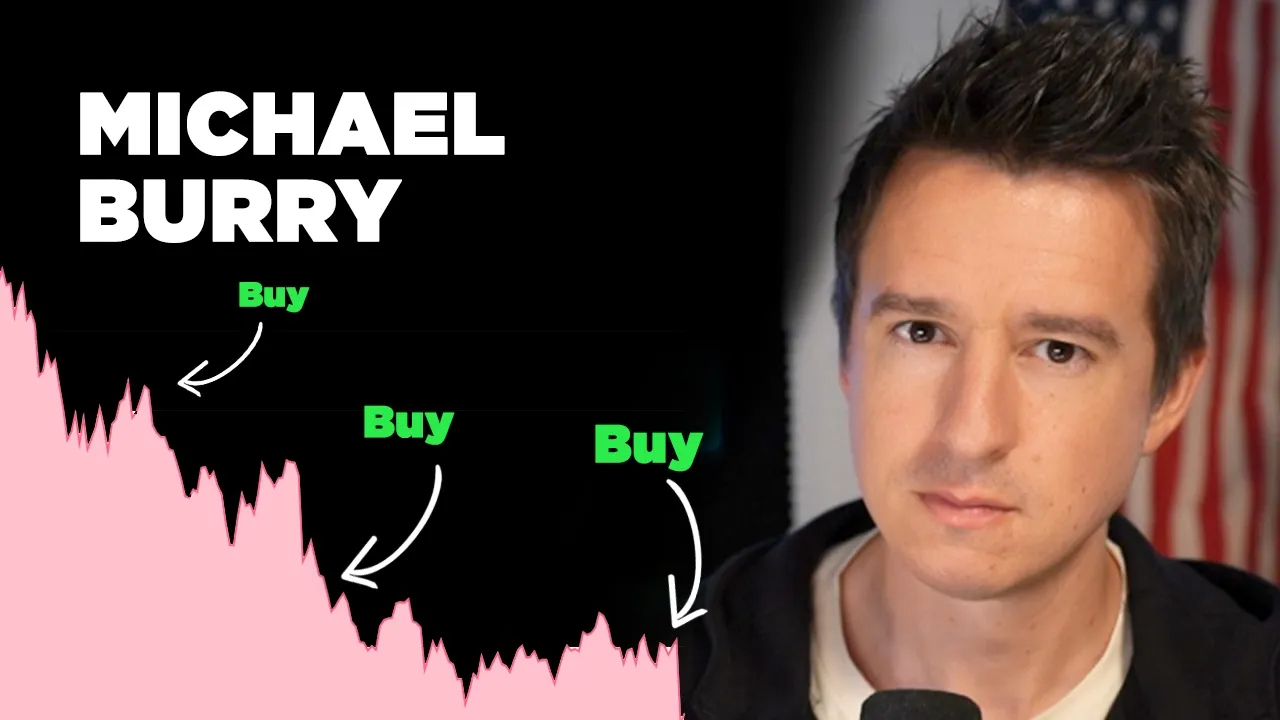
…% since the purchase price of this fund. We also have a more recent update in February of 2026. He's no longer managing his fund. He's just managing his own money and he's running a blog. Michael Bry said that Lululemon has pulled back and I'm adding to my position a bit. So, Michael Bry was buying the stock at 177 earlier this year with his own personal money. And he said that he would load the truck if the stock falls below 150. Right now, it's $100 per share. So, it's substantially down below his own cos…
I'm adding to my position a bit.
Contexte extrait par IA
Michael Bry said that Lululemon has pulled back and I'm adding to my position a bit.
…ild out an audience. >> And many people, including Ross Gerber, believes that eventually this will lead to Uber getting cooked. I think humans have to differentiate the service level from the robo taxis and then they'll be able to compete. But on a whole, I think Uber's cooked. >> The thought here is as robo taxis continue to grow and spread, Uber's in a lot of trouble. And I don't believe that that's really the case, at least to the extent that people are trying to argue. One of the things that I think a lot of …
But on a whole, I think Uber's cooked.
Contexte extrait par IA
And many people, including Ross Gerber, believes that eventually this will lead to Uber getting cooked. I think humans have to differentiate the service level from the robo taxis and then they'll be able to compete. But on a whole, I think Uber's cooked.
…. He's just managing his own money and he's running a blog. Michael Bry said that Lululemon has pulled back and I'm adding to my position a bit. So, Michael Bry was buying the stock at 177 earlier this year with his own personal money. And he said that he would load the truck if the stock falls below 150. Right now, it's $100 per share. So, it's substantially down below his own cost basis. And Michael Bur hasn't been discouraged by this. In fact, he's continued to double and triple down on this, continuing to buy more and more Lululemon. Hi…
he said that he would load the truck if the stock falls below 150.
Contexte extrait par IA
So, Michael Bry was buying the stock at 177 earlier this year with his own personal money. And he said that he would load the truck if the stock falls below 150.
Transcription Complète
Welcome back everyone. Today on the Joseph Carlson show, we have three stocks that are all beaten down. These are companies that are in dramatic dips. We're going to be going over all three of them. They're Lululemon, Intuitive Surgical, and Adobe. And all three of these have stories. For example, Lululemon is the top investment from Michael Bur. Intuitive Surgical is one of the biggest medical equipment makers in the world. It's considered one of the highest quality companies in the world. It's still growing fast, but the stock price is going down. And then we have Adobe, which like many software companies, it's been beat down for the past year, but it's reporting earnings this Thursday. Could it have a big bump like Salesforce? Well, I'll be making my predictions here. We also have news to get into today. For example, the Cyber Cab launch happened. Tesla had the same type of theatrical event. They had lots of people jump in and they drove around in vehicles that didn't have steering wheels. So, I'll be giving some thoughts on this as many investors have concluded at the launch of the Cyber Cab that Uber is dead. Even Ross Gerber said that Uber is toast. We'll be looking at the significance of the Cybercap event and what I believe a lot of Tesla investors are missing in this discussion. And then we also have even more. We have an extremely awkward trailer with a new documentary featuring Elizabeth Holmes and Nathan Fielder. This is one of the most awkward previews to a movie or documentary I've literally ever seen. So, I'll be going over that. And then finally, we have the fail of the week, which this week unfortunately is Gemini. I have to outline Gemini here because three hikers used Gemini to plan a hiking trip of which it turned out to be a complete disaster. So, we'll be going over that story as well. Now, we start things off by looking at Lululemon, the yoga pants company. And this one is in a lot of trouble. The stock price continues to plummet. In fact, when we look at Lululemon this year, it's quite literally one of the worst performing stocks of the year. Year to date, it's down 51%. If we zoom out in the past trailing year, it's down 38%. the past 5 years, check this out. Lululemon is down 76%. Now, when we find a stock like this, which was just recently considered a great brand and a great stock, in fact, it was unstoppable. Now, it seems like nobody wants to buy it, that creates an interesting dynamic. These are turnaround plays. Peter Lynch called them turnaround plays and he said that there's some of the best opportunities in the market if you get them right. What's happening with Lululemon today is that the stock is going through a very troubling time. So if we look at the revenue growth, this company was growing revenue continually in the 15s to 20% per year. After COVID, after the 2020 bump, it gained a ton of market share. This period of time, Lululemon was unstoppable. I saw it all through the internet, on Reddit, on X, on every stock forum, on every Discord. People were talking about Lululemon, this unstoppable clothing company. It's the new Nike. The story had a lot of magic in it at the time. But then things started to change. Operations shifted. The management screwed up big time. A lot of competitors started mimicking their product. You had Alo Yoga. You had Viori imitating their products, making even different variations of it. Companies like Costco sold dupes of Lululemon. And the growth started to slow down. In fact, the growth over just the past year has basically flattened out to be low inflation. The revenue hasn't only slowown down over the past year. It continues to decelerate and even go into the negative. In fact, the forecast for this upcoming year are minus 11% EPS growth. So EPS are going to decline and minus 1% revenue growth. So while the growth has heavily slowed down, it's decelerated and it's even going into the red. We have investors abandoning the stock and that's what's pushing down the price and it's also pushing down the multiples that the stock trades at today. The forward PE ratio over the next 12 months is 11.9 and that's assuming earnings per share shrinking. These valuations are well below commodity multiples, meaning that Lululemon is currently being priced for capital destruction. And while most investors have given up on Lululemon, there's still a few investors that have hope, that believe a turnaround will eventually happen. Michael Bur is one of them. In fact, Michael Bur has been interested in Lululemon for quite a while. In fact, going back to 2025 when he was still managing his fund, he had Lululemon as a 32% position. The average share price was 177. So, the shares are roughly down 45% since the purchase price of this fund. We also have a more recent update in February of 2026. He's no longer managing his fund. He's just managing his own money and he's running a blog. Michael Bry said that Lululemon has pulled back and I'm adding to my position a bit. So, Michael Bry was buying the stock at 177 earlier this year with his own personal money. And he said that he would load the truck if the stock falls below 150. Right now, it's $100 per share. So, it's substantially down below his own cost basis. And Michael Bur hasn't been discouraged by this. In fact, he's continued to double and triple down on this, continuing to buy more and more Lululemon. His most recent indications are that he's still overwhelmingly bullish on this company. And in fact, it's now his largest position in his personal account. So, what does he see with this stock? Well, there's a couple things that he's outlined. The biggest one is that he believes Lululemon is a much better brand than a management team. Meaning that the brand of Lululemon is actually great. It's a great product. It's super high quality. It's well-loved by very affluent people. Uh, it's just a great brand, but the management has stunk. He believes that the management is terrible and they've mismanaged an incredible brand. That's something that's very common in the athleisure and in the apparel industry. And there's examples of this even with Lululemon. Here are the ads that were running a year or so ago. This is what they looked like. Now, we have on the left here Viori and Alo Yoga. These are the two biggest competitors, direct competitors to Lululemon. These are the type of ads they were running, the way that they were presenting their product. On the right, we have Lululemon. This was a real ad. This is not AI. This is just a a year or so ago. It's a a grandma, like a a very old lady, 78 years old influencer working out in Lululemon pants. And this is just one example, which is a marketing issue. I could go through far more tactical and navigation mistakes that Lululemon has done. So part of the thesis here is that Lululemon actually has still a great product. And if management gets back on track, if they really do real marketing, real product design, and they become more relevant, they will take back market share. they'll earn back the trust of their customers and the stock could have a big bounce because of that. They could reacelerate growth once again. But there's other factors to this stock. For example, we looked once at the valuation, but if we look at this again, it already implies a lot of the problems. The deceleration in growth, the marketing issues, the product design, all of that is baked into the stock today. So people like Michael Bur argue that this company's already priced as a bad company and if they have any type of positive momentum, any type of turnaround, it could be massive both in Lulu stock and in others. And there's another thing that a low valuation does. It makes it so that the company can buy back its own shares at increasingly attractive prices. This is the game that Salesforce eventually did. They took out leverage to buy back their own shares. When we look at the share count over time, we can see that Lululemon could arguably do the same thing. They're already reducing the share count by over 5% per year, which is very big. Retiring all of those shares out of the float makes it so that when you own a share, you actually own a bigger percentage of the company. And they could accelerate this. I could see Lululemon going from 5% share reduction to 7% to 10% per year. In fact, they could push this upwards of above 10% share count reduction per year because they have very low dilution. They have very low stockbased comp. And another thing is that Lululemon has an incredibly powerful balance sheet. Now, we have here a lot of capital leases. Those are like lease agreements and malls. That's more of an ongoing expense. When you look at the amount of cash they have, it's at 1.39 billion. So, they do have some financial flexibility here. And if they wanted to, they could use some of this cash to buy back shares if their shares get attractive enough. Another thing Michael Bur has argued with Lululemon is that it's not unusual for a stock that's a great brand to go through a troubled time period for people to lose hope on it and then to have it have a turnaround. For example, he references Abberrombi and Fitch. This clothing brand, which I don't even think is good. It's not as good as Lululemon. It's a lot different of a style, but I don't think it's quite as unique as Lululemon. But look at this stock chart. This one was also in just 2022 at $30 per share. It went up to 185. Then it went back to 83. Then it went back to $150 per share today. So this shows you that the story for these type of stocks can change dramatically. What Michael Bur is looking at is this type of thing playing out. He believes that right now Lululemon is somewhere right here. And although he's been wrong so far, Lululemon has continually gone down. Even after he's purchased shares, he's in the red deeply on this stock. He is sticking with this pick. Another one that he references is Ralph Lauren. another clothing brand wellknown and it's gone through a series of troubles in the past 10 years. People were giving up on the stock in 2022 and then it has this meteoric rise. So this type of thing has happened before in other similar companies. The biggest factor to look at with Lululemon is deciding whether or not this problem in the company is temporary or permanent. Whether or not they have permanently given up their moat, there's no room for recovery and there's going to be no turnaround. If you believe that's the case, then it doesn't matter how cheap this stock gets. But if you think there's a chance that they can reaccelerate growth, recover their marketing, get back on track to any degree, this one could have a massive turnaround. Another thing Michael Bur has argued with Lululemon is that it's not unusual for a stock that's a great brand to go through a troubled time period for people to lose hope on it and then to have it have a turnaround. For example, he references Abbercrombie and Fitch. This clothing brand, which I don't even think is good. It's not as good as Lululemon. It's a lot different of a style, but I don't think it's quite as unique as Lululemon. But look at this stock chart. This one was also in just 2022 at $30 per share. It went up to 185. Then it went back to 83. Then it went back to $150 per share today. So this shows you that the story for these type of stocks can change dramatically. What Michael Bur is looking at is this type of thing playing out. He believes that right now Lululemon is somewhere right here. And although he's been wrong so far, Lululemon has continually gone down even after he's purchased shares. He's in the red deeply on this stock, he is sticking with this pick. Another one that he references is Ralph Lauren, another clothing brand, wellknown, and it's gone through a series of troubles in the past 10 years. People were giving up on the stock in 2022, and then it has this meteoric rise. So, this type of thing has happened before in other similar companies. The biggest factor to look at with Lululemon is deciding whether or not this problem in the company is temporary or permanent. But if you think there's a chance that they can reacelerate growth, recover their marketing, get back on track to any degree, this one could have a massive turnaround. Now, next up, we have Intuitive Surgical. This is a company that I've historically avoided because it's in the medical field. And like most things in the medical field, it's very difficult to understand the industry. There's lots of regulations. There's lots of red tape, and it seems overall like a difficult industry to invest in. But Intuitive Surgical has a very unique business model within the medical field. And I actually believe it's a very very good business model. But Intuitive Surgical is in a decline. Like the stocks are outlining here. This one has been really crushed over just the year-to- date period. It's down 36%. We go to the one-year down 23% completely flat on the 5 years. We go to 10 years and we see more of a long-term trend. And this is where this one gets interesting. Intuitive Surgical at a glance seems like a high-quality stock where investors got a little too excited, a little ahead of themselves. But now investors, those same investors are pulling back. The momentum has faded. Now, this one's a bit different than Lululemon. It doesn't trade anywhere near the low valuation of Lululemon. So, for example, it trades at a 31 Ford PE ratio. That's still a premium PE ratio, but it's no longer crazy. The PE ratio was in the 50s and 60s before. Now, it's come down to a more reasonable premium PE ratio. We also have a free cash flow yield of only 2.56%. So this isn't Lululemon where it's trading at a 10 PE and a 12% free cash flow yield. It's much more expensive, but it's also not Lululemon where this company's no longer growing revenue. If we look at the analyst expectations, this next quarter it's expected to grow at 12% and then over the next year it's expected to grow at 13%. And I think that's part of the problem is it was just growing at 20%, now it's expected to grow at roughly 13%. So there is deceleration and that's what's concerning a lot of investors. They believe that this company has gotten to a point of more saturation and slower growth. So that high-flying valuation needs to come down. Now, Intuitive Surgical is a very interesting company. It's one that I started to study and I plan on doing a deep dive into. But for now, I'll just give you a basic rundown of what this company does. I view it as a printer and the ink type of company. You know, when you buy a printer, it's not too expensive. You just get the printer in your home, but then you realize it runs out of ink and then you have to buy ink and the ink is very expensive. And that's basically what this company does. The printer in this case are surgical devices that they sell to hospitals. Once they sell them to hospitals, those surgical devices require a lot of tooling and a lot of disposable things. They're one-use things. So the company starts by selling a surgical device to either a clinic, a hospital, or any type of medical system. They buy that and that's some of the revenue. So they make money on the sale, but that's really not where they like to make most of their money. The biggest portion of it comes from instruments and accessories. These are things that they have to use new that are compatible with the surgical equipment or with the system every single time they do a surgery. So every time they're using it, they're running through that ink from the printer. That's the instruments, that's the accessories. But then there's a third thing. This is as if the printer itself has to be serviced every once in a while to continue working. These systems are complex. sometimes they break down and they're the ones that service the systems. So you also have service revenue as well. So basically everything relies initially on getting systems installed. Once you have the system installed, then you have the instruments and accessories, then you have the services. We have another KPI that tracks their ongoing system installations. Now this is not the total systems installed. This is how many new that they're installing every single year. On a trailing 12-month basis, they've installed 2,000 new systems. All of those require constant parts, every surgery and constant maintenance. So, this is overall a very good business model of a company that continues to have its stock decline. Now, the last stock here is Adobe, which is in the center of the AI disruption debate. Adobee's now down to $256, down another 3%. When we look at this one year to date, it's down 23%. In the past 5 years, Adobee's down a staggering 61%. Adobe's narrative is that competition is catching up. Adobe is going to be disrupted. AI, image creation, and video creation tools and editing tools are getting better every single day. Adobe's pricing power is falling. The narrative continues to build every single quarter. Meanwhile, the fundamentals continue to go in the right direction. Even as recent as the last quarter, it grew by 12%. Fast growth. We look at the revenue by segment. They're continuing to grow in each segment of business. The forecasted estimates are slowing down a little bit. We have 13% earnings per share growth, but only 9% year-over-year revenue growth. So, investors are worried that it's starting to show in the numbers. While these are valid concerns, the thing to remember here is that Adobe has these concerns likely fully priced in at this point. It trades at a below 10 forward PE ratio. So, this company is basically being treated like a car company like Ford or something like a it's getting close to the airline category and it's a high margin faster growing software company. The free cash flow yield is now above a 10%. They do have some stockbased comp, but it only makes up around 19% of the total free cash flow. So even factoring in dilution, we're looking at an 8.5% free cash flow yield. Adobe's reporting earnings aftermarket close on Thursday. And if we look at the historical performance of Adobe in its earnings, it is remarkable. This company never misses. We can look at the estimates there and every single time they come in above the estimates. In fact, out of the past like 14 quarters, they've literally never missed on their earnings per share. So, if I have to take a guess, they're not going to miss. They're going to do the exact same thing they always do and beat by 2 to 3%. This is another company that's so beaten down. The sentiment so low on this stock that any glimmer of hope, any magic that's introduced into the stock, any type of positive guidance, it could cause renewed enthusiasm and we could see the stock jump big in a single day. Now, moving on, we get into some news. We had the Cyber Cab launch event from Tesla. Even though there's no gigantic uh big stream event or anything like that, we did see a lot of creators upload content of them getting into the cyber cab and having it drive them around. And then there's lots of video footage of it just driving around. It's doing smaller trips in a little area in Texas today, but this shows the technology that it's working on the roads. Now, there's lots of different reactions to this. The media itself and reporters weren't too impressed. But then as it just kind of kept going, it was kind of boring. And boring because it was doing what we do every day, and that is drive a car like a normal kind of person, but it was a robot. And so that's really what Tesla needs to be doing here is showing that it can put these robot cars onto streets, not have incidents, have it be boring, uh, and and gradually build out an audience. >> And many people, including Ross Gerber, believes that eventually this will lead to Uber getting cooked. I think humans have to differentiate the service level from the robo taxis and then they'll be able to compete. But on a whole, I think Uber's cooked. >> The thought here is as robo taxis continue to grow and spread, Uber's in a lot of trouble. And I don't believe that that's really the case, at least to the extent that people are trying to argue. One of the things that I think a lot of investors are leaving out is the concept of highly variable demand. A robo taxi network either has to decide between handling the normalized demand, the dark blue hours here and then they don't have enough vehicles for the peak demand or they have to overinvest and buy too many vehicles just to handle the times of peak demand. Then they have way too many vehicles being inefficient and ineffective during the normalized demand. This is a problem that Uber solves because Uber has variable demand. Uber can have people jump on the app and use their car that's in their garage whenever there's peak demand. People can leave their homes, they can go into the Uber network, they can start taking rides when demand spikes. And in most cities across the US, in most territories, demand is incredibly variable. There are only a couple of hours per day where you need a lot of rides and you need them all at once. And then the rest of the day, there's really not nearly as much traffic. That's rush hour. Now, the best situation here is a hybrid approach. one where you have some vehicles, some vehicles that can always go around that they can handle the normalized demand throughout the normal hours, but then you also have humans in the loop. Uber already has the hybrid approach. They already have all the human drivers and they're introducing and continually partnering with the robo taxis. And while Tesla is trying to test this and they have 40 on the road and they'll build out more and more over time and open slowly across different cities, Uber is doing the same thing with robo taxis. They have driverless vehicles already on their network and they're doing more and more of them. So having this hybrid approach, I think, is the best endgame. It makes the most sense. It satisfies the stable demand throughout the day and the peak variable demand that's all driven in a couple hours. Uber can utilize both of these and Uber will remain very valuable if people realize that they can always get a ride with Uber because there's always enough people to fulfill the demand. Now, next up, we get into a trailer for a documentary. This is a documentary on Elizabeth Holmes or the Theronos founder. I've covered her story in the past, but she's the one that created that blood testing device. And she's in jail for fraud. It was a massive fraud. And apparently Nathan Filder, yeah, like the the Nathan Filder, that guy, he is the one that did this documentary. So, this is just a bizarre thing on the surface, but when I saw the actual trailer, this is one of the most awkward trailers that I think I've ever seen. Let's go ahead and take a look here. I don't have anything to deceive you on. Of course, I'm not deceiving you. I'm engaging with you [music] as a human being. Why would I deceive you? >> There's no there's no [music] reason for me to do that. Okay. [music] All right. Okay. Good [music] shot. >> [music] >> You're being real right now. >> I'm always being real. She's not real. She's so She's so fake. Everything about Elizabeth Holmes, it's an act. Everything about her just feels weird and off and inauthentic. Her voice, her facial expressions, her eyes, everything about it feels inauthentic. And even her company was inauthentic. It was she literally faked the technology behind it. Elizabeth Holmes is somebody that's trying to get back in the cultural zeitgeist, like it's cool to be a big fraud. But just to just to refresh your memory, she defrauded investors. And yes, they were wealthy investors, but stealing from people that have a lot of money is still stealing. And many of these people invested in her specifically because they thought what she was making was going to be technology that was really useful in treating people. They had intentions of funding something that they thought would do well. But Elizabeth Holmes misrepresented the financials of her business, Theronos, to a degree we have never seen before. She said, for example, when they had roughly $100,000 of revenue, that they had in line of a hundred million. She said it would do billions of dollars of revenue, when they had essentially none. She said the technology was basically proven and tested by pharmaceutical companies. It wasn't. She said that it's treated patients. It hasn't. She faked just about every part of the company. And then she made billions of dollars. She was worth literally multiple billions of dollars and was recognized as one of the most successful women in the world. She did all of that based off lies, scams, and deception. So, this this trailer fits in line with somebody that will do anything, say anything to get her way. So, I'm excited to see this documentary. Apparently, Nathan Fer spent a lot of time with her. I think this will be a very interesting one. Now, finally, we get to the fail of the week, which unfortunately in this case, I have to highlight Gemini. Yes, the Gemini from the Google that I know and love. I've made a lot of money with the investment. I love the company, but I have to be fair here. This is a massive failure by Gemini. It's a story of three hikers that decided to use Gemini as advice for how to prepare for this hike. Hikers from Roseville are homes safe after getting stranded on Mount Shasta. Wait to hear what happened. On Monday morning, the Syskiu County Sheriff's Office search and rescue team. They assisted US Forest Service climbing rangers to save the three men stranded on the Clear Creek route. Now, at the conclusion of the rescue, the men said they had relied heavily on Google's Gemini AI to provide them with information about the route as well as what to pack for their This is This is not the media that you want. There's people that say any media is good media. This is not good media. You don't want your AI being highlighted as a thing these hikers relied on when they had to be rescued. It's just not a good situation. Let's go ahead and continue listening. Trip, unfortunately. Hm. They were given false information. Ashley Williams is here live in studio with a message from the sheriff's office about the use of AI. I could kind of guess what they're going to say. >> Exactly. >> Exactly. This is it's a wild story, Tony. The sheriff's office says this was a critical misstep. Google's Gemini told the group to bring far less food and water than what was required, especially when their planned 8hour ascent became a multi-day ordeal. Here's what happened. and the hikers made. >> Okay, she just said that Gemini told them to bring far less food and water than they really needed, especially when their planned 8-hour hike turned into a multi-day one. Well, how did that happen? How did you plan for an 8hour hike, which is is not even a big hike? That's like a pretty short hike if you're a hiker. Going up 4 hours and then turning around and coming down 4 hours. Not that difficult. How did that turn into a multi-day hike? Like, what what happened here? I'm starting to believe maybe Gemini isn't fully to blame here. I'm starting to think there's some user error and maybe a little bit of uh misjudgment. Let's see if we have any more details here. >> Camp on Saturday and departed with daypacks for Mount Shasta Summit at 3:00 Sunday morning. The recommended turnaround time though is 12 p.m. if you have not reached the peak, but the men pressed on well into the evening, summoning by 7:00 p.m. But things got sticky when they started to descend. An hour into their descent, they called the sheriff's office dispatch to ask for directions, but eventually wandered off route into the Mud Creek Canyon, and that's where they got stranded. >> All right, so they're blaming Gemini here. Did Gemini give them the wrong directions? Did they like bring up Google Maps and Google Maps was like, "Hey, go that way." And it was really this way. Gemini was probably correct. If they did the hike correctly and not get lost, they would have had enough food. They chose to go the wrong direction. And it isn't highlighted here whether or not Gemini told them the wrong directions >> and camped out in the steep drainage until they were rescued the next morning by the USFS climbing rangers. So while AI is at the tip of our fingers, deputies are now reminding people it's not always reliable. >> Now they have people here warning about AI. I've actually changed my mind on this one. I'm no longer highlighting Gemini as a failure. I'm highlighting these three hikers who clearly just searched for instructions with Gemini. It gave them a basic instruction about the hike, but then they got lost halfway. They ran out of food. They had to call emergency services. And then to not look like fools, they blamed Gemini. This this is this is what we've gotten to. Whenever you do something right, it was our decisions. But whenever something goes wrong, that was the AI. The AI was the problem here. I don't think the AI is the reason that you went the wrong direction. We don't see that in the story. The only thing we know here is that Gemini didn't tell them to bring enough food because Gemini didn't assume they'd get lost for 2 days. And I'm not sure who's really to blame here. That's it for this episode. Hope you enjoyed. See you in the next one.

Commentaires 0
Connectez-vous pour rejoindre la discussion.
Se connecterAucun commentaire pour l'instant. Soyez le premier à partager votre avis !