…s, I also don't feel like I'm being handed an obvious bargain. I'd want to see the strong earnings growth continue, and I'd ideally like either a cheaper valuation or more evidence that profits can compound at a higher rate for many years. So for me, St. Joe's land somewhere between a soft buy and a watch list stock. I like the company. I understand what Tilson sees in it, and I think the land creates a genuinely interesting long-term opportunity. I just don't have a strong urge to chase it at its current valuation, and I certainly wouldn't build the i…
So for me, St. Joe's land somewhere between a soft buy and a watch list stock.
Contexte extrait par IA
I'd want to see the strong earnings growth continue, and I'd ideally like either a cheaper valuation or more evidence that profits can compound at a higher rate for many years. So for me, St. Joe's land somewhere between a soft buy and a watch list stock. I like the company. I understand what Tilson sees in it, and I think the land creates a genuinely interesting long-term opportunity.
Transcription Complète
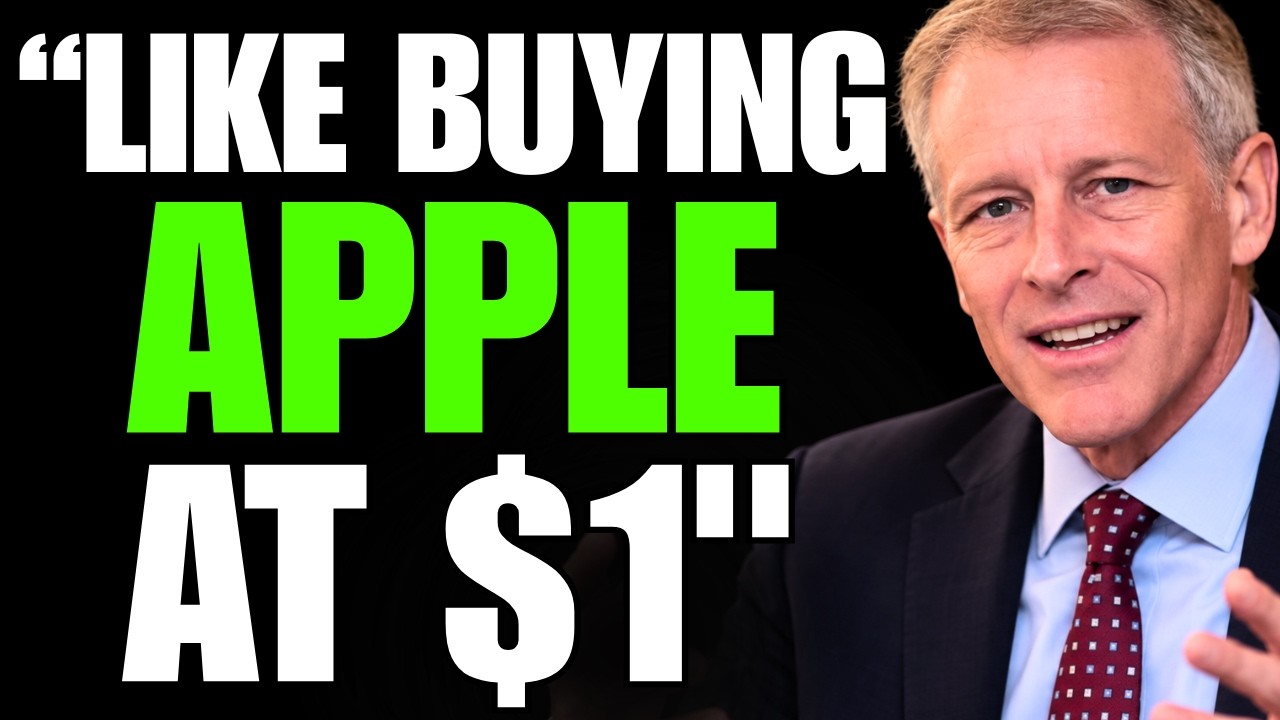
25 years ago, Whitney Tilson bought Apple when shares were trading for a split-adjusted dollar. And now, the long-term investor says he sees another opportunity to replicate those gains, except this time it has nothing to do with artificial intelligence or big technology companies. Tilson believes money is starting to rotate into smaller, overlooked stocks, and he identified one company that he thinks could potentially 10x from here in his latest presentation. The problem is Tilson won't reveal the stock unless you buy his newsletter, which costs thousands of dollars. This is where I come in. I sat down and watched Tilson's hour-long presentation and was able to figure out the stock based on the clues in the presentation. And in this video, I'm going to reveal the stock completely free, saving you thousands of dollars. But before we do anything, let's look at Whitney's recent track record to see if he's worth listening to. In 2025, Tilson recommended Chevron. That one worked out well and moved meaningfully higher after the pitch. He also recommended Eni. That turned into a huge winner with the stock more than doubling. Another pick was Lynas Rare Earths. That one also crushed it and climbed well over 100%. Then, in early 2026, Tilson pitched Landbridge. So far, that has been one of his better recent calls. He also recommended Halma and Pain. That stock has moved nicely higher since then. Another pick was Tenaris. That one has been a solid winner, although gains have been more modest. He also recommended GE Vernova. That stock has performed well since the recommendation, but not every pick has worked out well. Texas Pacific Land has struggled, and it's below where he pitched it. And Ormat Technologies has been one of the weaker calls, falling noticeably since the recommendation. So, overall, I'd say Tilson's recent record has been pretty strong with most of the stock picks working out in his favor. Now, let's quickly go through the presentation and figure out the stock. Whitney's entire argument starts with 1999. During the dot-com bubble, Tilson says he largely avoided the hottest technology stocks and instead focused on high-quality companies that could survive regardless of what happened to the broader market. And now, he believes we're entering a similar shift. Tilson thinks many of the huge technology stocks that have dominated the last few years could stop leading the market while smaller, lesser-known companies begin taking their place. To find those companies, he uses something he calls the Greenwich test. It's essentially a stock screening system that evaluates roughly 5,000 companies using 43 different factors, covering things like financial strength, quality, and other characteristics historically associated with strong returns. Then, they add another layer of filters designed to eliminate companies that are too risky, too small, or too thinly traded. And after all that, Tilson says around 15 to 30 stocks typically survive. He claims that this combination, smaller companies with unusually strong fundamentals, could produce some of the market's biggest winners over the next several years. In fact, he's predicting the strategy could uncover multiple stocks capable of gaining 500 to 1,000%. And And one company in particular stands out enough that Tilson is recommending it here. And here are the specific clues Whitney leaves us so we can figure out the stock. The first clue is that it's not a technology company. It's a real estate business, which narrows thousands of possible stocks down to a few hundred publicly traded companies involved in property development and land. But this company is unusual because it doesn't just own a few buildings. It controls roughly 165,000 acres of land, enough property that its future development pipeline could stretch for decades. And almost all of that land is concentrated in one part of the country. About 90% of its holdings are within 15 miles of the Gulf of America, giving the company enormous exposure to continued development of Northwest Florida. But the final clue is what really gives it away. The company already has development rights that could eventually support more than 170,000 homes, over 22 million square feet of commercial and industrial space, and more than 3,000 hotel rooms across its lands. So, to recap, the clues are 165,000 acres, Gulf Coast land, and enough entitlements to build an entire region. Only one stock fits all these clues. I'm going to reveal the stock in 15 seconds, but before I do, I want to tell you about my free report on the top 10 stocks to buy and hold right now. These are companies I believe have the best mix of strong long-term potential and growth. When you're done watching, click the link in the description, enter your email, and I'll send it right to your inbox. The stock being pitched here is the St. Joe Company, ticker JOE. But figuring out the stock was only half the battle. Now we have to figure out whether or not this stock can actually 10x like Whitney claims. And to do that, we're going to start first with what this company does, and then after, we're going to look at my final rating. The St. Joe Company is basically a real estate development and operating company built around Northwest Florida. It owns the lands, develops residential communities, sells home sites to builders, and also operates hotels, resorts, and commercial properties. So, the long-term idea is pretty simple. As more people and businesses move into the region, St. Joe can gradually turn its enormous land portfolio into higher value assets and recurring income. But, here's the reality check. This isn't some tiny, undiscovered company trading at a bargain valuation. At around $64 a share, St. Joe is already worth 3.7 billion. The business itself is performing well. Revenue reached 513 million in 2025, up 27% while net income jumped 56% to about 116 million. And that growth has continued into 2026 with first-half revenue up 15% and net income up 16%. But, you're also paying for that growth. At today's price, the stock trades around 30 times trailing earnings, which is a pretty significant valuation for a real estate company. So, going into the verdict, that's really the question for me. Is St. Joe's land, growth, and long-term development opportunity good enough to justify paying roughly 30 times earnings for the stock today? Now, let's get to my final rating and whether or not I think this stock is actually a buy. First, let's start with what Whitney is actually claiming, which is this stock is like when he bought Apple over 25 years ago and could 10X. Honestly, a 1,000% gain from here is a massive hurdle. With St. Joe trading around $64, a 1,000% gain would put the stock at roughly $700 a share. And at today's roughly $3.7 billion market cap, that would turn St. Joe into a company worth more than 40 billion dollars. So, this isn't a situation where a tiny company just needs one successful project. For that headline number to work, St. Joe would have to become a dramatically larger and more profitable business than it is today. There's a chance it could happen over a long period of time, though. St. Joe controls 165,000 acres in Northwest Florida, and management isn't simply sitting on the land. It's gradually developing residential communities, hotels, commercial properties, and other businesses around it. That's what I find interesting about the company. They can sell land and home sites today, but as areas develop, the remaining land could potentially become more valuable. At the same time, hotels, clubs, and commercial properties can create reoccurring revenue instead of St. Joe relying entirely on one-time land sales. And financially, we're already seeing some evidence this strategy is working. Revenue reached about $500 million in 2025, up 27%, while net income jumped 56% to roughly $116 million. So, this isn't just a story about land that might eventually be valuable. The company is already profitable. Revenue is growing. Profits are growing. And it's beginning to generate more income from the ecosystem it has built around the land. That's the part of Tilson's argument I can understand. Where I start to hesitate is the price you're being asked to pay for it. At roughly 30 times trailing earnings, St. Joe isn't priced like some forgotten real estate company that nobody has discovered yet. A lot of optimism is already embedded in the stock. And that's important when we're talking about a potential 1,000% return. St. Joe somehow maintained roughly the same valuation multiple, then for the stock to increase 11-fold, earnings would eventually need to increase by something close to 11-fold as well. We're talking about taking roughly $116 million of annual profit and eventually turning it into well over a billion dollars a year. That's possible in theory, but it requires a lot to go right for a very long time. Northwest Florida has to continue attracting residents, tourists, and businesses. St. Joe has to keep converting its land in increasingly valuable developments. Its hotels and commercial properties and other reoccurring businesses need to become much larger. And the company needs to keep producing strong earnings growth without the market eventually deciding that 30 times earning is too expensive for a real estate business. Because even very strong growth takes time. If earnings compounded at 20% every single year, it would still take roughly 13 years to grow 11-fold. At 15%, you're talking 17 years. So when I hear a number like 1,000%, that's where I separate the marketing from the actual case. I don't think you need St. Joe to become the next Apple for this to work as an investment. A more realistic case is that they continue developing valuable land, reoccurring revenue becomes a larger part of the company, and earnings compound steadily over a long period. If that happens, I can absolutely see why the stock could continue doing well. But around $64 and at roughly 30 times earnings, I also don't feel like I'm being handed an obvious bargain. I'd want to see the strong earnings growth continue, and I'd ideally like either a cheaper valuation or more evidence that profits can compound at a higher rate for many years. So for me, St. Joe's land somewhere between a soft buy and a watch list stock. I like the company. I understand what Tilson sees in it, and I think the land creates a genuinely interesting long-term opportunity. I just don't have a strong urge to chase it at its current valuation, and I certainly wouldn't build the investment case around expecting a 1,000% return. And before you go, don't forget to grab my free report on the top 10 stocks to buy and hold right now. These are companies I believe offer the best combination of long-term growth potential and strong underlying businesses. Just click the link in the description, enter your email, and I'll send the full report straight to your inbox.

Commentaires 0
Connectez-vous pour rejoindre la discussion.
Se connecterAucun commentaire pour l'instant. Soyez le premier à partager votre avis !